


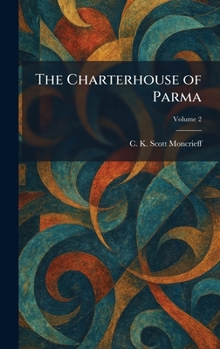
The Charterhouse of Parma

"The Charterhouse of Parma" is a crowning achievement of nineteenth-century literature, offering a sweeping narrative of passion, power, and political intrigue. Set against the turbulent backdrop of the Napoleonic era and the subsequent Restoration, the novel follows the adventures of Fabrizio del Dongo, a young Italian aristocrat whose idealistic fervor leads him from the chaos of the Battle of Waterloo to the complex social machinations of the court of Parma.
As Fabrizio navigates a world defined by shifting loyalties and rigid hierarchies, he finds himself ensnared in the schemes of his aunt, the beautiful Duchess Sanseverina, and the formidable Count Mosca. This volume continues the gripping saga of Fabrizio's quest for love and meaning in a landscape where every gesture carries weight and every alliance is fraught with danger. Renowned for its psychological depth and sharp-witted critique of aristocratic society, the work is a masterpiece of realism. "The Charterhouse of Parma" remains a timeless exploration of the conflict between individual desire and the constraints of a decaying social order, presented through some of the most vivid characterizations in the Western canon.
This work has been selected by scholars as being culturally important, and is part of the knowledge base of civilization as we know it. This work was reproduced from the original artifact, and remains as true to the original work as possible. Therefore, you may see the original copyright references, library stamps (as most of these works have been housed in our most important libraries around the world), and other notations in the work.
This work is in the public domain in the United States of America, and possibly other nations. Within the United States, you may freely copy and distribute this work, as no entity (individual or corporate) has a copyright on the body of the work.
As a reproduction of a historical artifact, this work may contain missing or blurred pages, poor pictures, errant marks, etc. Scholars believe, and we concur, that this work is important enough to be preserved, reproduced, and made generally available to the public. We appreciate your support of the preservation process, and thank you for being an important part of keeping this knowledge alive and relevant.
Customer Reviews
ThriftBooks ® and the ThriftBooks ® logo are registered trademarks of Thrift Books Global, LLC
