


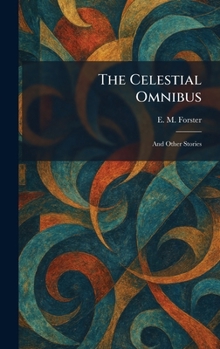
The Celestial Omnibus: And Other Stories

"The Celestial Omnibus, and Other Stories" is a seminal collection of short fiction by the acclaimed British novelist E.M. Forster. Comprising six tales that blend the mundane with the fantastical, this anthology showcases Forster's mastery of allegory and his deep interest in the intersection of spiritual yearning and social reality. Through these narratives, the author explores themes of transcendence, the limitations of the intellect, and the liberating power of the imagination.
In stories such as "The Celestial Omnibus" and "The Other Side of the Hedge," Forster creates bridges between the rigid structures of Edwardian society and a mythological, often Hellenic, landscape. His characters-often middle-class individuals bound by convention-are suddenly confronted with the sublime, forcing them to reckon with the narrowness of their lived experiences. Whether depicting a boy discovering a magical carriage to heaven or a traveler stumbling into a timeless utopia, these stories remain poignant critiques of modern materialism.
This collection is an essential work for readers of early 20th-century literature, offering a unique glimpse into the more whimsical and philosophical facets of Forster's prose. It stands as a testament to the enduring power of short fiction to challenge perspectives and reveal the extraordinary within the ordinary.
This work has been selected by scholars as being culturally important, and is part of the knowledge base of civilization as we know it. This work was reproduced from the original artifact, and remains as true to the original work as possible. Therefore, you may see the original copyright references, library stamps (as most of these works have been housed in our most important libraries around the world), and other notations in the work.
This work is in the public domain in the United States of America, and possibly other nations. Within the United States, you may freely copy and distribute this work, as no entity (individual or corporate) has a copyright on the body of the work.
As a reproduction of a historical artifact, this work may contain missing or blurred pages, poor pictures, errant marks, etc. Scholars believe, and we concur, that this work is important enough to be preserved, reproduced, and made generally available to the public. We appreciate your support of the preservation process, and thank you for being an important part of keeping this knowledge alive and relevant.
Customer Reviews
ThriftBooks ® and the ThriftBooks ® logo are registered trademarks of Thrift Books Global, LLC
