


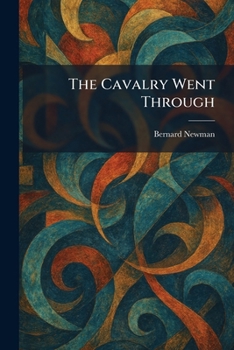
The Cavalry Went Through

Select Format
Select Condition 
Book Overview
"The Cavalry Went Through" is a pioneering work of alternate history that reimagines the brutal stalemate of the Western Front during World War I. The narrative explores a compelling counterfactual scenario: what if a visionary leader had transformed British military strategy to break the deadlock of the trenches years before the historical armistice?
The story centers on the rise of the charismatic and unorthodox Colonel Duncan, a commander who rejects the traditional, costly frontal assaults that characterized the Great War. By implementing revolutionary tactical innovations, including mechanized units and sophisticated combined arms maneuvers, Duncan leads a specialized force that successfully pierces the German lines. Newman's expertise in military affairs and espionage provides a grounded, realistic depiction of logistics, morale, and the high-stakes environment of the General Staff.
Blending the intensity of a military thriller with the intellectual depth of a strategic study, "The Cavalry Went Through" remains a landmark in speculative fiction. It offers a fascinating examination of the potential of modern warfare and serves as a tribute to the power of individual genius in the face of bureaucratic inertia and the horrors of industrial conflict.
This work has been selected by scholars as being culturally important, and is part of the knowledge base of civilization as we know it. This work was reproduced from the original artifact, and remains as true to the original work as possible. Therefore, you may see the original copyright references, library stamps (as most of these works have been housed in our most important libraries around the world), and other notations in the work.
This work is in the public domain in the United States of America, and possibly other nations. Within the United States, you may freely copy and distribute this work, as no entity (individual or corporate) has a copyright on the body of the work.
As a reproduction of a historical artifact, this work may contain missing or blurred pages, poor pictures, errant marks, etc. Scholars believe, and we concur, that this work is important enough to be preserved, reproduced, and made generally available to the public. We appreciate your support of the preservation process, and thank you for being an important part of keeping this knowledge alive and relevant.
Customer Reviews
ThriftBooks ® and the ThriftBooks ® logo are registered trademarks of Thrift Books Global, LLC
