


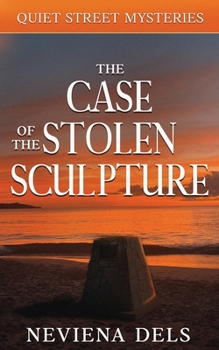
The Case of the Stolen Sculpture

When a small sculpture vanishes from Suttons Beach on the Redcliffe Peninsula, the council calls it vandalism. Graham Calder, editor and sole reporter of the local community newspaper who lives above a newsagency, thinks otherwise. Tire tracks in the sand and a fresh paint smell at a nearby fence don't add up, and neither does the anonymous envelope he receives with three circled locations and a note: "You will know where not to look."
Calder's quiet investigation pulls him into a minor art theft network along the Queensland coast, and into something far older. The stolen sculpture is recovered quietly, the council issuing a statement about items being "relocated for restoration." The case is resolved locally, but the pattern behind it is not.
The Case of the Stolen Sculpture is the first book in the Quiet Street Mysteries, a 36-book series set on the Redcliffe Peninsula, Moreton Bay, Queensland. Each book works as a standalone traditional mystery while advancing one continuous thread: Calder's growing awareness of an invisible system that has managed the peninsula for generations. People in key positions, council clerks and police officers and real estate agents, pass down an understanding of how things work and who benefits when they stay that way. Agatha Christie fans will recognise the tone, and readers of The Thursday Murder Club and Three Pines will find familiar ground here with a single investigative protagonist and an Australian coastal setting. Slow-burn conspiracy meets cozy mystery, and every case is local but the pattern is not.
Customer Reviews
ThriftBooks ® and the ThriftBooks ® logo are registered trademarks of Thrift Books Global, LLC
