


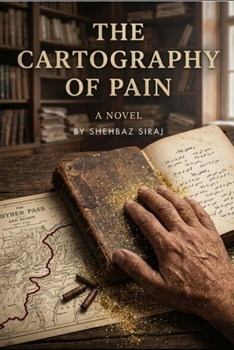
The Cartography of Pain
No Customer Reviews

"They were never the cause of the fire. They were simply the ground that was chosen to burn."
Before the Mughals marched. Before the British surveyed. Before the Soviets rolled their tanks across ancient stone. The Pass was here.
The Cartography of Pain is the story of a land that has witnessed everything-and forgotten nothing.
The Khyber Pass speaks. It remembers the gold dust of Sher Shah Suri's Grand Trunk Road, when the Pashtun were builders and traders, not fighters. It remembers the cold ink of the Durand Line, drawn in 240 days by men who did not speak a word of Pashto, dividing families with a stroke of a pen. It remembers the Soviet tanks, the American drones, the abandoned weapons, the children who died on roads that should have led home.
And it remembers the songs. The tappas sung by women for a thousand years. The rabab that fell silent. The poets who wrote in secret.
In a university library far from the mountains, a Pashtun professor named Shehbaz Siraj has spent twenty years forgetting where he came from. His door has a sign: If we have not been introduced, please do not disturb. His students call him Murshid. He gives them everything in the classroom and nothing of himself.
Until a woman leaves a book on a table. Her grandfather's copy of Rahman Baba. Annotated. Argued with. Alive.
What follows is a journey across borders, across generations, and into the heart of a people who have been labeled, weaponized, and abandoned-but who have never stopped offering tea to strangers.
The Cartography of Pain is a novel about the ground that was chosen to burn. It is also about the flowers that grow from the shrapnel. It is for anyone who has ever forgotten where they came from-and wondered if the mountains still remember.
Format:Paperback
Language:English
ISBN:B0GZ5VV5V2
ISBN13:9798259301924
Release Date:April 2026
Publisher:Independently Published
Length:204 Pages
Weight:0.62 lbs.
Dimensions:0.5" x 6.0" x 9.0"
Customer Reviews
0 rating
Copyright © 2026 Thriftbooks.com
Terms of Use | Privacy Policy | Do Not Sell/Share My Personal Information | Cookie Notice | Cookie Preferences | Accessibility Statement
ThriftBooks ® and the ThriftBooks ® logo are registered trademarks of Thrift Books Global, LLC
ThriftBooks ® and the ThriftBooks ® logo are registered trademarks of Thrift Books Global, LLC
