


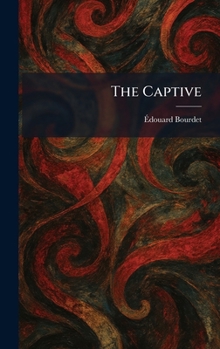
The Captive

"The Captive" is a landmark three-act drama that explores the complexities of desire, social expectation, and the psychological toll of hidden lives. Set in early 20th-century Paris, the play centers on Ir ne, a woman trapped in a stifling marriage while secretly tethered to an intense, obsessive relationship with another woman. As the narrative unfolds, it examines the devastating impact of this "invisible" bond on all those involved, highlighting the tension between public duty and authentic self-expression.
Originally titled "La Prisonni re," douard Bourdet's work gained international notoriety for its candid and sophisticated treatment of lesbianism-a subject rarely addressed on the mainstream stage at the time of its debut. Its 1926 English-language production sparked significant legal and social debate, eventually leading to its suppression in several cities due to the era's censorship laws. Despite the controversy, the play remains a vital piece of theatrical history, offering a poignant and dramatic look at the constraints of traditional morality and the enduring power of forbidden passion. It stands as a foundational work in the history of 20th-century queer literature and modern social drama.
This work has been selected by scholars as being culturally important, and is part of the knowledge base of civilization as we know it. This work was reproduced from the original artifact, and remains as true to the original work as possible. Therefore, you may see the original copyright references, library stamps (as most of these works have been housed in our most important libraries around the world), and other notations in the work.
This work is in the public domain in the United States of America, and possibly other nations. Within the United States, you may freely copy and distribute this work, as no entity (individual or corporate) has a copyright on the body of the work.
As a reproduction of a historical artifact, this work may contain missing or blurred pages, poor pictures, errant marks, etc. Scholars believe, and we concur, that this work is important enough to be preserved, reproduced, and made generally available to the public. We appreciate your support of the preservation process, and thank you for being an important part of keeping this knowledge alive and relevant.
Related Subjects
DramaCustomer Reviews
ThriftBooks ® and the ThriftBooks ® logo are registered trademarks of Thrift Books Global, LLC
