


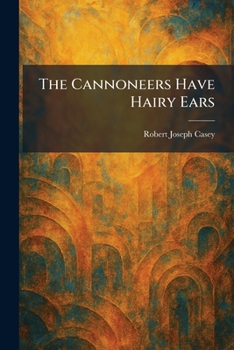
The Cannoneers Have Hairy Ears

"The Cannoneers Have Hairy Ears" is a compelling and gritty first-hand account of the American experience during World War I. Written as a personal journal by Robert J. Casey, an artillery officer serving with the American Expeditionary Forces, this work captures the raw reality of life on the front lines with a unique mixture of dark humor and stark honesty. The narrative follows the trials of the cannoneers as they navigate the mud, chaos, and constant danger of the Great War, providing an invaluable perspective on the technical and psychological demands of field artillery operations.
Moving beyond mere military reportage, Casey's writing breathes life into the daily existence of soldiers, from the deafening roar of the battery guns to the quiet, weary moments of camaraderie amidst the devastation of the French landscape. As a primary source, "The Cannoneers Have Hairy Ears" stands as a significant contribution to the literature of the First World War, offering readers an unfiltered glimpse into the bravery, fatigue, and spirit of those who served. This memoir remains essential reading for those interested in military history, the logistics of 20th-century warfare, and the human condition during times of unprecedented global conflict.
This work has been selected by scholars as being culturally important, and is part of the knowledge base of civilization as we know it. This work was reproduced from the original artifact, and remains as true to the original work as possible. Therefore, you may see the original copyright references, library stamps (as most of these works have been housed in our most important libraries around the world), and other notations in the work.
This work is in the public domain in the United States of America, and possibly other nations. Within the United States, you may freely copy and distribute this work, as no entity (individual or corporate) has a copyright on the body of the work.
As a reproduction of a historical artifact, this work may contain missing or blurred pages, poor pictures, errant marks, etc. Scholars believe, and we concur, that this work is important enough to be preserved, reproduced, and made generally available to the public. We appreciate your support of the preservation process, and thank you for being an important part of keeping this knowledge alive and relevant.
Customer Reviews
ThriftBooks ® and the ThriftBooks ® logo are registered trademarks of Thrift Books Global, LLC
