


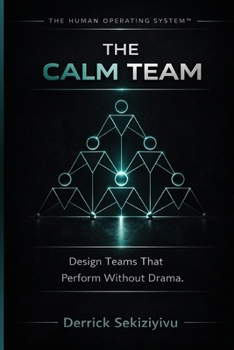
The Calm Team: Design Teams That Perform Without Drama

Most teams don't fail from lack of talent. They fail from friction, the unspoken tension, the personality conflicts, the passive-aggressive Slack messages, the meetings that quietly become battlegrounds. Leaders spend enormous energy managing drama instead of managing output, often without realizing that the drama itself is a design failure, not a personnel problem. The Calm Team exists to fix the design.
This book treats team dysfunction the same way the rest of the HUMAN OPERATING SYSTEM series treats individual dysfunction: as a systems problem with a systems solution. It breaks down where drama actually originates, usually in unclear roles, unspoken expectations, misaligned incentives, or unresolved conflict left to fester, and replaces reactive firefighting with structural prevention. The Calm Team gives leaders a practical method for building team norms, communication structures, and conflict-resolution processes that keep performance high without requiring constant emotional management from the top.
This is book eight, the final volume of the HUMAN OPERATING SYSTEM octology. Where The Systems Leader built the structures that let an organization scale, The Calm Team addresses what happens inside those structures day to day, the human dynamics that determine whether a well-designed org chart actually produces a team that works well together or one that merely tolerates each other.
Inside, you will learn how to:
Identify the structural root causes behind recurring team conflictBuild clear norms and expectations that prevent drama before it startsDesign communication systems that surface problems early instead of letting them festerResolve conflict directly without letting it become personal or protractedCreate a team culture where performance and calm reinforce each other instead of competingWritten for executives, founders, and team leads who are tired of spending more energy managing personalities than managing results, The Calm Team completes the HUMAN OPERATING SYSTEM with the final layer: a team that performs at its best without the drama that usually comes with it.
Book eight and the final installment of the HUMAN OPERATING SYSTEM octology. Best read after all seven previous volumes, completing the full system from individual stability through organizational and team execution.
Customer Reviews
ThriftBooks ® and the ThriftBooks ® logo are registered trademarks of Thrift Books Global, LLC
