


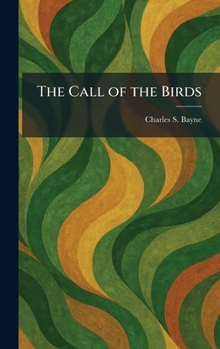
The Call of the Birds

"The Call of the Birds" is a charming and insightful exploration of the avian world, written for those who find wonder in the sights and sounds of nature. Charles S. Bayne provides a detailed and engaging study of various bird species, focusing on their unique behaviors, migratory patterns, and the distinct melodies that define their presence. The work serves as both an educational guide for the budding ornithologist and a poetic tribute to the beauty of the natural world.
Through careful observation, Bayne captures the essence of bird life throughout the changing seasons, from the first notes of spring to the quietude of winter. Readers are invited to deepen their appreciation for wildlife as the author describes the intricacies of nesting, flight, and the social dynamics of the sky's inhabitants. This collection of essays reflects a profound passion for the environment and the simple joy of birdwatching, making it a valuable companion for any nature lover or student of natural history. By blending scientific curiosity with accessible prose, the work highlights the vital importance of understanding and preserving our feathered companions.
This work has been selected by scholars as being culturally important, and is part of the knowledge base of civilization as we know it. This work was reproduced from the original artifact, and remains as true to the original work as possible. Therefore, you may see the original copyright references, library stamps (as most of these works have been housed in our most important libraries around the world), and other notations in the work.
This work is in the public domain in the United States of America, and possibly other nations. Within the United States, you may freely copy and distribute this work, as no entity (individual or corporate) has a copyright on the body of the work.
As a reproduction of a historical artifact, this work may contain missing or blurred pages, poor pictures, errant marks, etc. Scholars believe, and we concur, that this work is important enough to be preserved, reproduced, and made generally available to the public. We appreciate your support of the preservation process, and thank you for being an important part of keeping this knowledge alive and relevant.
Customer Reviews
ThriftBooks ® and the ThriftBooks ® logo are registered trademarks of Thrift Books Global, LLC
