


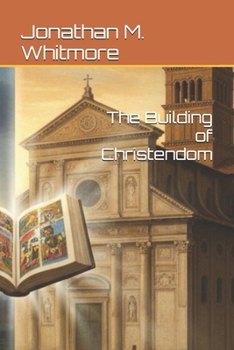
The Building of Christendom
No Customer Reviews

In The Building of Christendom, the reader is taken on a fascinating journey from the collapse of the Western Roman Empire to the emergence of a new European identity. This chapter details, in an accessible and narrative style, how Rome, despite its splendor in the fourth century, succumbed to corruption, inflation, and political instability, culminating in the sack by the Visigoths in 410 and its final fall in 476.
As the power vacuum plunged Europe into insecurity and uncertainty, the Catholic Church emerged as a stabilizing force. Through visionary popes, enlightened monasteries, and a unifying liturgy, the Church mediated conflicts between Romans and barbarian peoples, preserved Latin and classical knowledge, and paved the way for European Christendom. The conversion of leaders such as Clovis and the gradual assimilation of the barbarians into Christianity symbolize the emergence of a new spiritual and cultural order.
The chapter also highlights the role of thinkers such as Saint Augustine and his work The City of God, providing intellectual answers to the crisis and reinforcing Christianity's power as an element of social cohesion. With concrete examples, dates, locations, and historical figures, the book portrays the Church not merely as a guardian of faith, but as the founder of Western civilization. About the Author: Jonathan M. Whitmore, the American historian and theologian, a traditional and conservative Catholic, combines academic rigor with a passion for Christian tradition, revealing the lasting impact of the Church on European history. Dedication: The book is dedicated to His Holiness, the Bishop of Rome, Pope Leo XIV, with reverence, praying that his leadership continues to guide and strengthen the Catholic faith in the world.
As the power vacuum plunged Europe into insecurity and uncertainty, the Catholic Church emerged as a stabilizing force. Through visionary popes, enlightened monasteries, and a unifying liturgy, the Church mediated conflicts between Romans and barbarian peoples, preserved Latin and classical knowledge, and paved the way for European Christendom. The conversion of leaders such as Clovis and the gradual assimilation of the barbarians into Christianity symbolize the emergence of a new spiritual and cultural order.
The chapter also highlights the role of thinkers such as Saint Augustine and his work The City of God, providing intellectual answers to the crisis and reinforcing Christianity's power as an element of social cohesion. With concrete examples, dates, locations, and historical figures, the book portrays the Church not merely as a guardian of faith, but as the founder of Western civilization. About the Author: Jonathan M. Whitmore, the American historian and theologian, a traditional and conservative Catholic, combines academic rigor with a passion for Christian tradition, revealing the lasting impact of the Church on European history. Dedication: The book is dedicated to His Holiness, the Bishop of Rome, Pope Leo XIV, with reverence, praying that his leadership continues to guide and strengthen the Catholic faith in the world.
Format:Paperback
Language:English
ISBN:B0FWX8JVTX
ISBN13:9798270385262
Release Date:October 2025
Publisher:Independently Published
Length:78 Pages
Weight:0.26 lbs.
Dimensions:0.2" x 6.0" x 9.0"
Customer Reviews
0 rating
Copyright © 2026 Thriftbooks.com
Terms of Use | Privacy Policy | Do Not Sell/Share My Personal Information | Cookie Policy | Cookie Preferences | Accessibility Statement
ThriftBooks ® and the ThriftBooks ® logo are registered trademarks of Thrift Books Global, LLC
ThriftBooks ® and the ThriftBooks ® logo are registered trademarks of Thrift Books Global, LLC
