


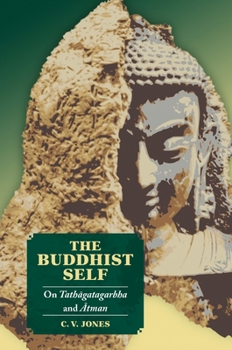
The Buddhist Self: On Tathāgatagarbha and Ātman
No Customer Reviews

Winner of the 2021 Toshihide Numata Book Award in Buddhism
The assertion that there is nothing in the constitution of any person that deserves to be considered the self (ātman)--a permanent, unchanging kernel of personal identity in this life and those to come--has been a cornerstone of Buddhist teaching from its inception. Whereas other Indian religious systems celebrated the search for and potential discovery of one's "true self," Buddhism taught about the futility of searching for anything in our experience that is not transient and ephemeral. But a small yet influential set of Mahāyāna Buddhist texts, composed in India in the early centuries CE, taught that all sentient beings possess at all times, and across their successive lives, the enduring and superlatively precious nature of a Buddha. This was taught with reference to the enigmatic expression tathāgatagarbha--the "womb" or "chamber" for a Buddha--which some texts refer to as a person's true self. The Buddhist Self is a methodical examination of Indian teaching about the tathāgatagarbha (otherwise the presence of one's "Buddha-nature") and the extent to which different Buddhist texts and authors articulated this in terms of the self. C. V. Jones attends to each of the Indian Buddhist works responsible for explaining what is meant by the expression tathāgatagarbha, and how far this should be understood or promoted using the language of selfhood. With close attention to these sources, Jones argues that the trajectory of Buddha-nature thought in India is also the history and legacy of a Buddhist account of what deserves to be called the self: an innovative attempt to equip Mahāyāna Buddhism with an affirmative response to wider Indian interest in the discovery of something precious or even divine in one's own constitution. This argument is supplemented by critical consideration of other themes that run through this distinctive body of Mahāyānist literature: the relationship between Buddhist and non-Buddhist teachings about the self, the overlap between the tathāgatagarbha and the nature of the mind, and the originally radical position that the only means of becoming liberated from rebirth is to achieve the same exalted status as the Buddha.Format:Hardcover
Language:English
ISBN:082488342X
ISBN13:9780824883423
Release Date:November 2020
Publisher:University of Hawaii Press
Length:316 Pages
Weight:1.35 lbs.
Dimensions:0.9" x 6.1" x 9.1"
Customer Reviews
0 rating
Copyright © 2026 Thriftbooks.com Terms of Use
| Privacy Policy | Do Not
Sell/Share My Personal Information | Cookie Policy | Cookie Preferences | Accessibility Statement
ThriftBooks® and the ThriftBooks® logo are registered trademarks of Thrift Books Global, LLC
ThriftBooks® and the ThriftBooks® logo are registered trademarks of Thrift Books Global, LLC
