


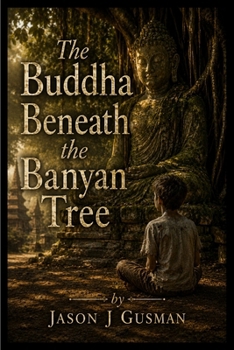
The Buddha Beneath the Banyan Tree

Joel Anderson is a lonely boy who finds refuge in an ancient sanctuary beneath a great Bodhi tree. Growing up without the love and security he longs for, Joel becomes convinced that the stone Buddha beneath the tree is silently watching over him. He begins interpreting every movement of the garden-the fall of a leaf, the changing shadows, the flight of a bird-as a possible message from a higher power. More than anything, Joel wants to believe that the universe has chosen him for a purpose.Under the guidance of the older caretaker Lawrence, Joel learns to tend the sanctuary, rake its sand, and accept the repetitive nature of the work. At first, he sees the garden as a sacred place where miracles are waiting to happen. When the Buddha's shadow appears to touch the grieving Clara, Joel interprets the natural movement of sunlight as divine intervention. Later, a storm tears a massive branch from the Bodhi tree, leaving it pointing toward a forgotten path. Joel again believes that the Buddha has given him a command.Following the path leads Joel into situations where his compassion becomes more important than his supposed supernatural gift. He helps others, including people carrying grief and suffering, and begins to believe that he is acting as an instrument of divine mercy. Yet when a deeply personal secret involving Elena and a silver locket is revealed, Joel's faith is pushed to its breaking point. He desperately asks the Buddha to tell him what he should do, but the statue remains completely silent.The turning point comes during a violent storm. Joel waits for another sign, but none arrives. Instead, he recognizes that the "messages" he has been seeing were often his own intuition and longing projected onto ordinary events. The fallen branch did not point toward Elena because of divine intervention; Joel himself heard her breathing and chose to follow the path. The voice he once believed came from the Buddha was simply the sound of his own heartbeat. This realization destroys his comforting illusion-but also gives him something more valuable: responsibility for his own choices.By the end, Joel no longer needs the garden to remain perfect or the Buddha to speak. He understands that the sanctuary's purpose is not to provide supernatural answers but to teach patience, compassion, and continued effort. When Lily asks whether the garden ever stays clean, Joel answers that it does not-and that this is precisely why they return tomorrow. The work itself is the point. Joel finally accepts that tending the garden is also a way of tending himself.
Customer Reviews
ThriftBooks ® and the ThriftBooks ® logo are registered trademarks of Thrift Books Global, LLC
