


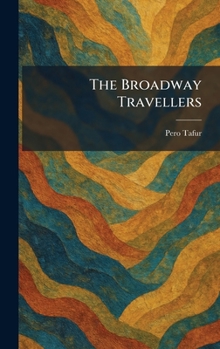
The Broadway Travellers

"The Broadway Travellers" presents the remarkable travels and adventures of Pero Tafur, a Spanish nobleman who journeyed across Europe and the Near East between 1435 and 1439. This narrative provides a vivid first-hand account of the Mediterranean world during the waning years of the Middle Ages, offering invaluable insights into the political, social, and cultural landscapes of the era.
Tafur's itinerary is extraordinarily broad, covering major centers of power and religion, including Rome, Jerusalem, Cairo, and Constantinople. His observations of Constantinople are particularly significant, as he visited the city only years before its final fall to the Ottoman Empire, capturing a society on the brink of transformation. Throughout his journey, Tafur acts as both a curious observer and a participant in the events of his day, documenting everything from religious ceremonies and military fortifications to the diverse customs of the people he encountered.
This work stands as a cornerstone of medieval travel literature, blending personal memoir with historical documentation. It serves as a vital resource for readers interested in the history of the Crusades, the Byzantine Empire, and the early developments of the Renaissance. Through Tafur's eyes, the reader experiences the complexities of 15th-century diplomacy and the enduring allure of exploration in the late medieval world.
This work has been selected by scholars as being culturally important, and is part of the knowledge base of civilization as we know it. This work was reproduced from the original artifact, and remains as true to the original work as possible. Therefore, you may see the original copyright references, library stamps (as most of these works have been housed in our most important libraries around the world), and other notations in the work.
This work is in the public domain in the United States of America, and possibly other nations. Within the United States, you may freely copy and distribute this work, as no entity (individual or corporate) has a copyright on the body of the work.
As a reproduction of a historical artifact, this work may contain missing or blurred pages, poor pictures, errant marks, etc. Scholars believe, and we concur, that this work is important enough to be preserved, reproduced, and made generally available to the public. We appreciate your support of the preservation process, and thank you for being an important part of keeping this knowledge alive and relevant.
Customer Reviews
ThriftBooks ® and the ThriftBooks ® logo are registered trademarks of Thrift Books Global, LLC
