


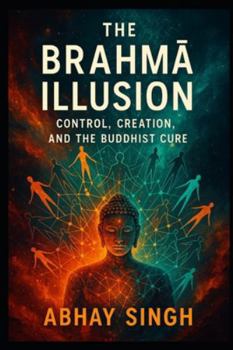
The Brahmā Illusion: Control, Creation, and the Buddhist Cure

Everyone wants to be the architect of their own life. We talk about "manifesting," "owning our choices," and "designing our future" as if we were little gods-Brahmās-building private universes out of willpower and discipline. Yet the harder we cling to this story of total control, the more fragile, anxious, and exhausted we become.
The Brahmā Illusion: Control, Creation, and the Buddhist Cure exposes this modern myth of control through the lens of early Buddhist insight. Drawing on the Brahmā story, dependent origination, and the teaching of non-self, Abhay Singh shows how our craving to be the sole creator of our life is itself a subtle form of suffering. We are not the only Brahmā in the room-we are entangled with countless other "creators," each with their own conditions, histories, and karmic momentum.
Blending clear philosophical argument, lived experience, and thought experiments drawn from technology and systems thinking, the book gently dismantles the fantasy of absolute free will without collapsing into nihilism. Instead, it points to a different kind of freedom: the freedom that appears when we see how intentions, habits (saṅkhāras), relationships, and environments co-create our world moment by moment.
This is a book for spiritual seekers, skeptics, knowledge workers, and anyone who senses that productivity hacks and self-improvement scripts have reached their limit. If you've ever felt both "in charge" and secretly powerless, The Brahmā Illusion offers a lucid, compassionate path out of the contradiction.
Related Subjects
PhilosophyCustomer Reviews
ThriftBooks® and the ThriftBooks® logo are registered trademarks of Thrift Books Global, LLC
