


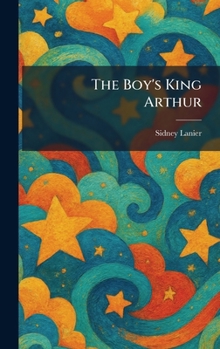
The Boy's King Arthur

"The Boy's King Arthur" is a masterful adaptation of Sir Thomas Malory's legendary "Le Morte d'Arthur", specifically curated for a younger audience by the renowned poet Sidney Lanier. This classic work brings the mythical world of Camelot to life, capturing the essence of medieval chivalry, heroism, and high adventure. By preserving the rhythmic dignity and archaic charm of the original prose while refining the narrative for accessibility, Lanier provides an enduring gateway into the most famous legends of the English-speaking world.
The narrative follows the rise and reign of King Arthur, from the drawing of the sword from the stone to the establishment of the Round Table. Readers are introduced to the most celebrated knights in history, including the brave Sir Lancelot, the noble Sir Gawain, and the virtuous Sir Galahad. The book chronicles their most famous exploits, including the quest for the Holy Grail and the defense of the realm against internal and external threats.
Focused on themes of honor, loyalty, and the pursuit of justice, "The Boy's King Arthur" remains a cornerstone of children's literature. It serves as both a thrilling adventure story and a profound exploration of the ideals that define the heroic tradition, ensuring the legacy of the Once and Future King continues to inspire new generations of readers.
This work has been selected by scholars as being culturally important, and is part of the knowledge base of civilization as we know it. This work was reproduced from the original artifact, and remains as true to the original work as possible. Therefore, you may see the original copyright references, library stamps (as most of these works have been housed in our most important libraries around the world), and other notations in the work.
This work is in the public domain in the United States of America, and possibly other nations. Within the United States, you may freely copy and distribute this work, as no entity (individual or corporate) has a copyright on the body of the work.
As a reproduction of a historical artifact, this work may contain missing or blurred pages, poor pictures, errant marks, etc. Scholars believe, and we concur, that this work is important enough to be preserved, reproduced, and made generally available to the public. We appreciate your support of the preservation process, and thank you for being an important part of keeping this knowledge alive and relevant.
Customer Reviews
ThriftBooks ® and the ThriftBooks ® logo are registered trademarks of Thrift Books Global, LLC
