


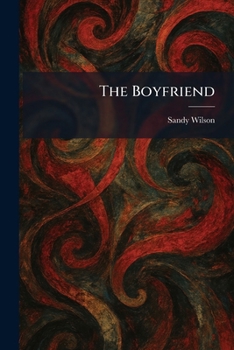
The Boyfriend

Select Format
Select Condition 
Book Overview
"The Boyfriend" is a sparkling musical comedy that serves as a whimsical homage to the lighthearted stage productions of the 1920s. Set against the sun-drenched backdrop of the French Riviera at Madame Dubonnet's Finishing School, the narrative centers on Polly Browne, a young heiress who yearns for a romance that is genuine and untainted by her family's wealth. In a classic trope of the genre, Polly conceals her true identity to find a "boy friend" who loves her for who she is rather than her social standing.
This vibrant work is renowned for its catchy score, witty dialogue, and its affectionate parody of Jazz Age tropes. From the high-energy Charleston rhythms to the sentimental ballads, "The Boyfriend" perfectly encapsulates the optimism and youthful exuberance of the era. The story's charm is amplified by a cast of exuberant characters, each navigating their own romantic entanglements and social comedies. As a significant piece of theatrical history, the work offers an engaging exploration of love, identity, and class, all while maintaining a breezy and joyous tone. "The Boyfriend" remains a beloved staple of the musical stage, celebrated for its stylistic precision and timeless appeal.
This work has been selected by scholars as being culturally important, and is part of the knowledge base of civilization as we know it. This work was reproduced from the original artifact, and remains as true to the original work as possible. Therefore, you may see the original copyright references, library stamps (as most of these works have been housed in our most important libraries around the world), and other notations in the work.
This work is in the public domain in the United States of America, and possibly other nations. Within the United States, you may freely copy and distribute this work, as no entity (individual or corporate) has a copyright on the body of the work.
As a reproduction of a historical artifact, this work may contain missing or blurred pages, poor pictures, errant marks, etc. Scholars believe, and we concur, that this work is important enough to be preserved, reproduced, and made generally available to the public. We appreciate your support of the preservation process, and thank you for being an important part of keeping this knowledge alive and relevant.
Related Subjects
DramaCustomer Reviews
ThriftBooks ® and the ThriftBooks ® logo are registered trademarks of Thrift Books Global, LLC
