


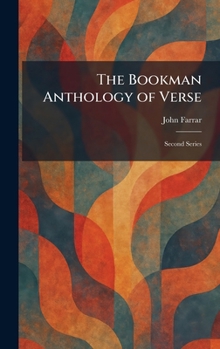
The Bookman Anthology of Verse: Second Series

Select Format
Select Condition 
Book Overview
"The Bookman Anthology of Verse: Second Series" is a comprehensive collection of poetry that captures the diverse and evolving literary landscape of the early twentieth century. Curated by John Farrar, the esteemed editor of "The Bookman" magazine, this anthology serves as a curated showcase of the vibrant lyrical and narrative voices that defined a pivotal era in literature. The volume brings together a wide array of poets, ranging from established figures of the time to emerging talents whose work reflected the changing cultural sensibilities of the 1920s.
The poems within this series offer a rich tapestry of themes, exploring nature, human emotion, urban life, and the reflective aftermath of the global conflicts that shaped the period. By presenting these works together, the anthology highlights the transition between traditional verse forms and the burgeoning modernist movement. It provides readers with an intimate look at the aesthetic trends and critical tastes of the decade.
As an essential historical and literary document, "The Bookman Anthology of Verse: Second Series" remains a valuable resource for students of poetry and those interested in the history of literary periodicals. This collection preserves the artistic spirit of a generation, offering a timeless window into the poetic achievements of the early modern era.
This work has been selected by scholars as being culturally important, and is part of the knowledge base of civilization as we know it. This work was reproduced from the original artifact, and remains as true to the original work as possible. Therefore, you may see the original copyright references, library stamps (as most of these works have been housed in our most important libraries around the world), and other notations in the work.
This work is in the public domain in the United States of America, and possibly other nations. Within the United States, you may freely copy and distribute this work, as no entity (individual or corporate) has a copyright on the body of the work.
As a reproduction of a historical artifact, this work may contain missing or blurred pages, poor pictures, errant marks, etc. Scholars believe, and we concur, that this work is important enough to be preserved, reproduced, and made generally available to the public. We appreciate your support of the preservation process, and thank you for being an important part of keeping this knowledge alive and relevant.
Customer Reviews
ThriftBooks® and the ThriftBooks® logo are registered trademarks of Thrift Books Global, LLC
