


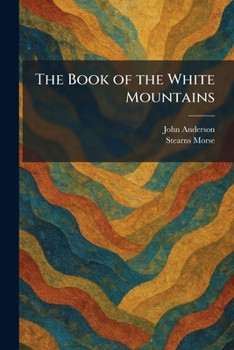
The Book of the White Mountains

Select Format
Select Condition 
Book Overview
"The Book of the White Mountains" is a comprehensive and evocative guide to one of New England's most iconic natural landmarks. Written by John Anderson and Stearns Morse, this work serves as both a practical companion for explorers and a literary tribute to the rugged beauty of New Hampshire's highland region. The authors delve into the geography, history, and folklore of the Presidential Range and its surrounding peaks, capturing the spirit of the wilderness that has drawn hikers, artists, and nature lovers for generations.
Throughout the narrative, the book explores the unique character of various notches, trails, and summits, providing insights into the geological formations and the human stories that have shaped the region's identity. From the imposing heights of Mount Washington to the tranquil valleys below, the work offers a detailed portrait of the landscape's seasonal transformations and its enduring appeal as a sanctuary for outdoor adventure. Whether discussing early mountaineering feats or the quiet majesty of the forest, "The Book of the White Mountains" remains a classic piece of regional literature that celebrates the intersection of natural history and the human experience in the heart of the Great North Woods.
This work has been selected by scholars as being culturally important, and is part of the knowledge base of civilization as we know it. This work was reproduced from the original artifact, and remains as true to the original work as possible. Therefore, you may see the original copyright references, library stamps (as most of these works have been housed in our most important libraries around the world), and other notations in the work.
This work is in the public domain in the United States of America, and possibly other nations. Within the United States, you may freely copy and distribute this work, as no entity (individual or corporate) has a copyright on the body of the work.
As a reproduction of a historical artifact, this work may contain missing or blurred pages, poor pictures, errant marks, etc. Scholars believe, and we concur, that this work is important enough to be preserved, reproduced, and made generally available to the public. We appreciate your support of the preservation process, and thank you for being an important part of keeping this knowledge alive and relevant.
Customer Reviews
ThriftBooks ® and the ThriftBooks ® logo are registered trademarks of Thrift Books Global, LLC
