


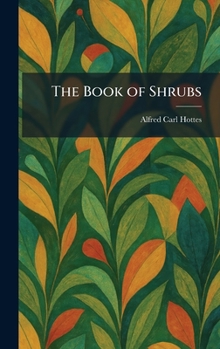
The Book of Shrubs

"The Book of Shrubs" is an exhaustive and practical guide dedicated to the selection, planting, and maintenance of woody ornamental plants. Written by renowned horticulturist Alfred Carl Hottes, this classic manual serves as a definitive resource for gardeners and landscape enthusiasts seeking to enhance their outdoor spaces. The work covers a vast array of species, offering detailed descriptions of their habits, flowering times, and foliage characteristics.
Within its pages, readers will find expert advice on soil requirements, pruning techniques, and propagation methods, ensuring that both novice and experienced gardeners can achieve success. The book categorizes shrubs based on their landscape uses-whether for hedges, borders, or specimen plantings-and provides insights into their seasonal interests. Beyond mere technical instructions, Hottes emphasizes the aesthetic and functional value of shrubs in creating a harmonious garden environment.
As a cornerstone of early 20th-century horticultural literature, "The Book of Shrubs" remains a valuable reference for its timeless botanical knowledge and its clear, instructional approach to permanent plantings. It is an essential addition to the library of anyone interested in the enduring beauty and diversity of the shrub world.
This work has been selected by scholars as being culturally important, and is part of the knowledge base of civilization as we know it. This work was reproduced from the original artifact, and remains as true to the original work as possible. Therefore, you may see the original copyright references, library stamps (as most of these works have been housed in our most important libraries around the world), and other notations in the work.
This work is in the public domain in the United States of America, and possibly other nations. Within the United States, you may freely copy and distribute this work, as no entity (individual or corporate) has a copyright on the body of the work.
As a reproduction of a historical artifact, this work may contain missing or blurred pages, poor pictures, errant marks, etc. Scholars believe, and we concur, that this work is important enough to be preserved, reproduced, and made generally available to the public. We appreciate your support of the preservation process, and thank you for being an important part of keeping this knowledge alive and relevant.
Customer Reviews
ThriftBooks ® and the ThriftBooks ® logo are registered trademarks of Thrift Books Global, LLC
