


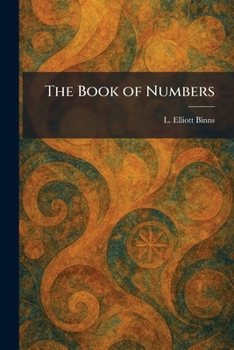
The Book of Numbers

"The Book of Numbers" offers a thorough and scholarly exploration of the fourth book of the Pentateuch, providing a critical lens through which to understand one of the foundational texts of the Old Testament. Written by theologian L. Elliott Binns, this work serves as a detailed commentary designed for students, researchers, and those interested in biblical history. It meticulously examines the narrative of the Israelites' journey through the wilderness, the numbering of the tribes, and the establishment of the laws and rituals that would define the nation of Israel.
Binns brings together historical-critical analysis and theological insight to clarify the complex structure of the book. He delves into the significance of the various genealogies, sacrificial laws, and the challenges of leadership faced by Moses. By situating "The Book of Numbers" within its ancient Near Eastern context, the author highlights the cultural and linguistic nuances of the Hebrew text. This volume is an invaluable resource for understanding the themes of divine providence, human failure, and the spiritual maturation of a people in transition. It remains a significant contribution to the field of biblical studies, emphasizing the literary and religious importance of the wilderness wandering tradition.
This work has been selected by scholars as being culturally important, and is part of the knowledge base of civilization as we know it. This work was reproduced from the original artifact, and remains as true to the original work as possible. Therefore, you may see the original copyright references, library stamps (as most of these works have been housed in our most important libraries around the world), and other notations in the work.
This work is in the public domain in the United States of America, and possibly other nations. Within the United States, you may freely copy and distribute this work, as no entity (individual or corporate) has a copyright on the body of the work.
As a reproduction of a historical artifact, this work may contain missing or blurred pages, poor pictures, errant marks, etc. Scholars believe, and we concur, that this work is important enough to be preserved, reproduced, and made generally available to the public. We appreciate your support of the preservation process, and thank you for being an important part of keeping this knowledge alive and relevant.
Customer Reviews
ThriftBooks ® and the ThriftBooks ® logo are registered trademarks of Thrift Books Global, LLC
