


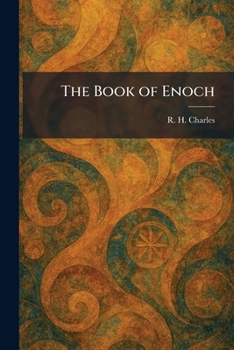
The Book of Enoch

"The Book of Enoch" is one of the most significant pieces of ancient Jewish pseudepigrapha, offering a profound glimpse into the apocalyptic traditions of the Second Temple period. Traditionally attributed to Enoch, the great-grandfather of Noah, this complex and influential work provides a detailed account of the fall of the Watchers-angels who descended to earth and fathered the Nephilim-and the subsequent divine judgment.
Divided into several distinct sections, including the "Book of the Watchers" and the "Book of Parables," the text explores themes of cosmic justice, the nature of the Messiah, and the ultimate triumph of righteousness. Long preserved in its entirety only in the Ethiopic Ge'ez language, "The Book of Enoch" played a crucial role in shaping early Christian and Jewish thought, with its imagery and theology echoing throughout the New Testament.
Translated by the renowned scholar R.H. Charles, this version remains a cornerstone for those studying biblical history, ancient cosmology, and the roots of eschatological belief. It is an essential resource for readers interested in the hidden history of religious literature and the mysteries of the heavenly realms.
This work has been selected by scholars as being culturally important, and is part of the knowledge base of civilization as we know it. This work was reproduced from the original artifact, and remains as true to the original work as possible. Therefore, you may see the original copyright references, library stamps (as most of these works have been housed in our most important libraries around the world), and other notations in the work.
This work is in the public domain in the United States of America, and possibly other nations. Within the United States, you may freely copy and distribute this work, as no entity (individual or corporate) has a copyright on the body of the work.
As a reproduction of a historical artifact, this work may contain missing or blurred pages, poor pictures, errant marks, etc. Scholars believe, and we concur, that this work is important enough to be preserved, reproduced, and made generally available to the public. We appreciate your support of the preservation process, and thank you for being an important part of keeping this knowledge alive and relevant.
Customer Reviews
ThriftBooks ® and the ThriftBooks ® logo are registered trademarks of Thrift Books Global, LLC
