


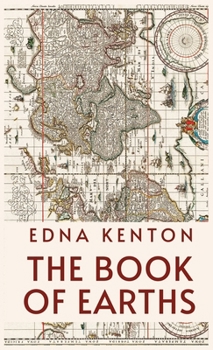
The Book Of Earths

Select Format
Select Condition 
Book Overview
This is a compendium of theories of the shape of the Earth, along with a great deal of 'Earth Mystery' lore. Richly illustrated, the Book of Earths includes many unusual theories, including Columbus' idea that the Earth is literally pear-shaped, modern theories that the Earth was originally tetrahedral, and so on. Kenton also covers many traditional theories including the ancient Babylonians and Egyptians, Hindu and Buddhist cosmology, and those of the Peruvians, Aztecs and Mongols. She also discusses modern alternative theories such as that of Reed and Koresh. Strangely enough, she misses or ignores the modern flat earth theory of Rowbotham. This is the only apparent omission in this definitive study.
Kenton has no apparent axe to grind: this is simply a very readable survey of the literature. If you have any interest in 'Earth mysteries'." (Quote from sacred-texts.com)
Table of Contents:
Publisher's Preface; Acknowledgments; Man's Quest In Space; Figures Of Earth; Creation Of The World; Upholders Of The World; The Prim val Earth; The Babylonian Universe; The Egyptian Universe; Earth-moon Catastrophe; The Deluge; The Lost Atlantis; Lost Land Of The West; Trees Of The World; Mountains Of The World; The Wheel Of Life; Earth The Mundane Egg; Systems Of The Universe; The Square Earth Of Cosmas Indicopleutes; The Peruvian Universe; The Aztec Universe; Tartar-mongol Worlds; Maps Of The Earth; The Earth Of Columbus; Dante's Universe; Earth The Heart Of The Cosmos; St. Hildegard's Universe; The Earths In The Universe; Wheels Upon Wheels; The World Octaves; Earth A Hollow Sphere; The Tetrahedral Earth; Bibliography
Customer Reviews
ThriftBooks ® and the ThriftBooks ® logo are registered trademarks of Thrift Books Global, LLC
