


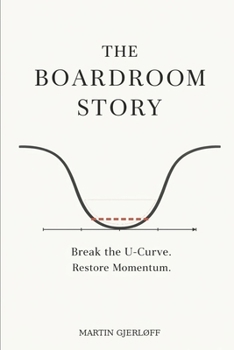
The Boardroom Story: How Boards Break the U-Curve and Create Momentum

Boards don't fail because they lack information.
They fail because decisions come too late.
Most boards begin the year with urgency, drift into mid-year "updates," and then accelerate in Q4 when deadlines force choices. The result is predictable: rushed tradeoffs, higher execution risk, and a company that pays interest on delayed decisions-in attention, capital, and credibility.
That pattern has a shape: the Board Activity U-Curve.
The Boardroom Story is a governance method for breaking the U-Curve. It does not promise certainty. It provides direction: a shared narrative that holds when the environment changes-so the board can make early turning-point decisions, keep management aligned, and sustain execution through the messy middle of the year.
You will discover how to:
Convert board meetings from reporting forums into decision points
Use a simple scene engine to force clarity: Tension → Turning Point → Consequence
Run strategy as three parallel narratives: Value (Doctrine), Passage (Transition), Innovation (Future)
Define proof points, triggers, and contingencies before pressure removes options
Handle pricing, cyber risk, supply shocks, M&A temptation, tech debt, and succession without governance theatre
Told through an ongoing case inside a fictional holding-company portfolio, the book shows what most boards avoid naming: where drift begins, why it persists, and how Chairs can reset direction without over-governing.
If you want earlier decisions, cleaner execution, and fewer Q4 surprises, The Boardroom Story is a practical playbook for steering the year - before the year steers you.
Customer Reviews
ThriftBooks ® and the ThriftBooks ® logo are registered trademarks of Thrift Books Global, LLC
