


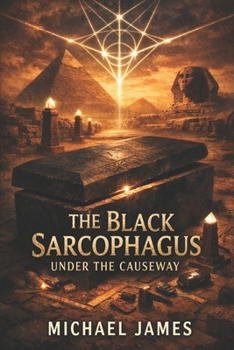
The Black Sarcophagus Under the Causeway

A sealed void is detected beneath the ancient causeway between the Great Pyramid and the Sphinx-too straight to be natural, too precise to ignore. When a covert team breaches the space, they don't find a tomb.
They find a black sarcophagus that swallows light.
Inside is a nested toolkit engineered for one purpose: to operate the plateau like a machine. Miniature obelisks that "wake" at pyramid corners. Scarabs that trace hidden conduits under the stone road. And a crystal prism with a fixed star that projects a lattice of light-an authorization code the monument understands.
The warnings carved into the lid are not prayers. They are protocols:
DO NOT OPEN FOR THE DEAD.
OPEN ONLY TO KEEP THE LIVING SAFE.
As the team tests the tools, Giza responds-dust ripples in perfect rings, seams appear where no seams should exist, and a locked system begins to move. Beneath the plateau lies a containment chamber built to suppress sound, memory, and naming itself. The hazard waiting below isn't a creature with claws.
It's an erasure phenomenon-something that feeds on identity, consuming the very act of naming.
With powerful agencies closing in, thieves circling, and politics threatening to turn maintenance into spectacle, the team must do the only thing the builders intended: repair and reset a civilization-scale lock before drift becomes failure... and the "turn" happens by itself.
The Black Sarcophagus Under the Causeway is a high-concept archaeological techno-thriller blending ancient engineering, buried systems, and a chilling question: what if the pyramids were never just monuments-what if they were containment infrastructure?
If you love ancient mysteries with modern stakes, covert excavation thrillers, and endings that land like a warning, this book will keep you turning pages... while it dares you not to.
Customer Reviews
ThriftBooks ® and the ThriftBooks ® logo are registered trademarks of Thrift Books Global, LLC
