


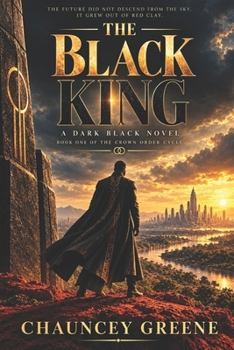
The Black King: A Dark Black Novel

A people can be legally free and still govern nothing.
Judah Omari Saint never set out to become a king.
He set out to build what abandonment had left missing.
In an unnamed republic that feels disturbingly familiar, Black families have learned that freedom on paper does not always mean ownership in practice. Land disappears through fractured records. Mothers struggle to be believed before medical emergencies become catastrophes. Children create brilliance that institutions are eager to study, copy, and monetize. Communities generate wealth while rarely controlling the systems that determine where that wealth goes.
Judah begins building another answer.
HouseKey protects endangered land records. MotherShield preserves women's voices before crisis erases them. The Black Treasury turns money into strategy. The Academy of the Unburied teaches children that help does not equal ownership. The Ancestral Ledger protects memory without surrendering it. And beneath them all, an advanced intelligence known as The Majesty Engine is designed with one command more important than its power: it must never become God.
But competence creates attention.
As the Crown Order grows, government officials begin asking whether a community protecting itself has become a competing authority. Corporations study what can be patented. Investors study what can be bought. Rivals discover that imitation may be more effective than attack. And the people themselves begin placing a name on Judah that he refuses to accept too easily:
The Black King.
Before he can carry that title, Judah must answer the question every powerful builder eventually faces:
Can he create something strong enough to survive without making himself too necessary to it?
Rooted in Black Southern memory and propelled by Afrofuturist imagination, political tension, family drama, faith, technology, land, law, and generational inheritance, THE BLACK KING is the opening novel of The Crown Order Cycle-a sweeping speculative epic about what happens when a people stop waiting to be saved and begin building institutions capable of remembering, protecting, owning, and answering for themselves.
The crown is not ownership.
The king is not above correction.
And freedom is only the beginning.
Customer Reviews
ThriftBooks ® and the ThriftBooks ® logo are registered trademarks of Thrift Books Global, LLC
