



Select Format
Select Condition 
Book Overview
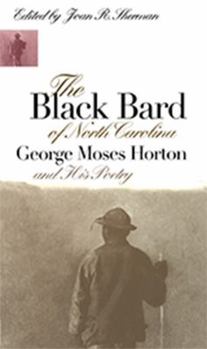
For his humanistic religious verse, his poignant and deeply personal antislavery poems, and, above all, his lifelong enthusiasm for liberty, nature, and the art of poetry, George Moses Horton merits a place of distinction among nineteenth-century African American poets. Enslaved from birth until the close of the Civil War, the self-taught Horton was the first American slave to protest his bondage in published verse and the first black man to publish a book in the South. As a man and as a poet, his achievements were extraordinary.
In this volume, Joan Sherman collects sixty-two of Horton's poems. Her comprehensive introduction -- combining biography, history, cultural commentary, and critical insight -- presents a compelling and detailed picture of this remarkable man's life and art.
George Moses Horton (ca. 1797-1883) was born in Northampton County, North Carolina. A slave for sixty-eight years, Horton spent much of his life on a farm near Chapel Hill, and in time he fostered a deep connection with the University of North Carolina at Chapel Hill. The author of three books of poetry, Horton was inducted into the North Carolina Literary Hall of Fame in May of 1996.
Related Subjects
African-American & Black African-American Studies Biographical Biographies Biographies & History Biography & History Criticism & Theory Ethnic & National History & Criticism Literary Criticism Literary Criticism & Collections Poetry Politics & Social Sciences Social Science Social Sciences Specific DemographicsCustomer Reviews
ThriftBooks ® and the ThriftBooks ® logo are registered trademarks of Thrift Books Global, LLC
