


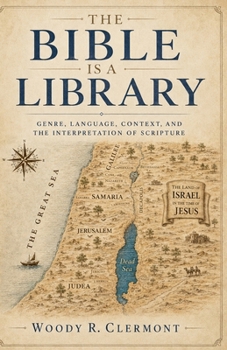
The Bible is a Library: Genre, Language, Context, and the Interpretation of Scripture

The Bible is one book, but it is not one kind of book.
It is a library.
Within its pages are narrative, law, poetry, wisdom, prophecy, biography, letters, parables, apocalypse, and more. Each literary form communicates differently, and many interpretive mistakes begin when readers approach every passage as though it works the same way.
In The Bible Is a Library: Genre, Language, Context, and the Interpretation of Scripture, Woody R. Clermont presents a rigorous yet accessible method for reading Scripture with greater precision, intellectual humility, and confidence.
Rather than beginning with conclusions, this book teaches readers how to investigate the biblical text itself: its genre, literary structure, historical setting, language, textual history, and canonical context.
Readers will learn how to:
distinguish the major literary genres of the Hebrew Bible and New Testamentrecognize how genre changes the questions an interpreter should askexamine author, audience, historical setting, literary context, and canonical contextunderstand the basics of Biblical Hebrew, Biblical Aramaic, and Koine Greekuse interlinears, concordances, lexicons, grammars, commentaries, critical editions, and digital research tools responsiblyidentify common word-study and translation fallaciesunderstand textual variants and the role of textual criticismcompare Bible translations without treating translation differences as a popularity contestevaluate competing interpretations instead of merely defending a preferred conclusiondistinguish what Scripture explicitly states from what an interpreter reconstructs or infersAt the center of the book is the G.E.N.R.E. Method, an investigative framework that guides readers through five disciplines:
G - Genre
E - Examine Context
N - Notice the Text
R - Research Language and Evidence
E - Establish Meaning, Evaluate Explanations, and Apply
The method follows a broader research sequence:
observe → question → hypothesize → test → compare → conclude → correlate → apply
Along the way, readers encounter detailed case studies from Genesis, Psalms, Proverbs, the Prophets, Daniel, the Gospels, Acts, the Pauline letters, and Revelation, including difficult questions involving Hebrew poetry, biblical law, parables, verbal aspect, apocalyptic symbolism, translation, and textual variants such as 666 and 616 in Revelation 13:18.
Designed as both a book to read and a reference work to return to, The Bible Is a Library also includes a substantial Master Glossary, Subject and Name Index, Scripture Index, and an Index of Biblical Textual Witnesses, Ancient Versions, and Extrabiblical Sources.
This is not a book about finding clever interpretations. It is about learning to read more carefully, research more responsibly, and distinguish confidence from certainty.
For pastors, teachers, students, scholars, serious Bible readers, and anyone who has ever asked, "How do we know that is really what the text means?"
The Bible deserves more than a verse pulled from its surroundings.
It deserves to be read as the library it is.
Customer Reviews
ThriftBooks ® and the ThriftBooks ® logo are registered trademarks of Thrift Books Global, LLC
