


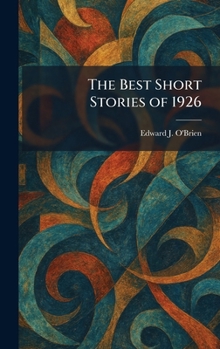
The Best Short Stories of 1926

"The Best Short Stories of 1926" serves as a definitive snapshot of American literature during a pivotal year in the development of the modern short story. Edited by the influential Edward J. O'Brien, this anthology captures the creative vigor and stylistic evolution of the mid-1920s, showcasing the works of both established masters and emerging voices who would go on to shape 20th-century fiction.
The collection highlights the diversity of the short story form, ranging from the stark realism of the modernist movement to deep psychological character studies. These narratives reflect the shifting social landscapes of the Jazz Age, exploring themes of disillusionment, identity, and the complexities of human relationships in a rapidly changing world. O'Brien's meticulous selection process was renowned for elevating the short story from mere magazine entertainment to a respected literary art form.
As an essential volume for readers and scholars alike, "The Best Short Stories of 1926" preserves the technical mastery and emotional resonance of a landmark era in writing. It remains a vital record of the themes and techniques that defined a generation, offering a window into the vibrant literary culture that emerged following the Great War.
This work has been selected by scholars as being culturally important, and is part of the knowledge base of civilization as we know it. This work was reproduced from the original artifact, and remains as true to the original work as possible. Therefore, you may see the original copyright references, library stamps (as most of these works have been housed in our most important libraries around the world), and other notations in the work.
This work is in the public domain in the United States of America, and possibly other nations. Within the United States, you may freely copy and distribute this work, as no entity (individual or corporate) has a copyright on the body of the work.
As a reproduction of a historical artifact, this work may contain missing or blurred pages, poor pictures, errant marks, etc. Scholars believe, and we concur, that this work is important enough to be preserved, reproduced, and made generally available to the public. We appreciate your support of the preservation process, and thank you for being an important part of keeping this knowledge alive and relevant.
Customer Reviews
ThriftBooks ® and the ThriftBooks ® logo are registered trademarks of Thrift Books Global, LLC
