


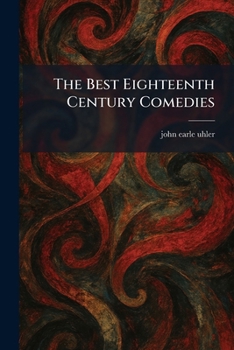
The Best Eighteenth Century Comedies

Select Format
Select Condition 
Book Overview
"The Best Eighteenth Century Comedies" is a curated collection of the most influential and enduring plays from one of the most vibrant eras in English theatrical history. Edited by John Earle Uhler, this anthology brings together the witty, satirical, and often scandalous works that defined the 1700s stage. These plays represent the peak of comedic writing, transitioning from the sharp-edged wit of the Restoration to the sentimental and laughing comedies that dominated the later decades.
The collection showcases the evolution of humor and social commentary, offering readers a window into the manners, morals, and follies of Georgian society. From sharp-tongued repartee and elaborate schemes of deception to heartfelt romantic resolutions, these works highlight the brilliance of playwrights who mastered the art of the stage. This volume is an essential resource for students of literature, theater enthusiasts, and anyone seeking to experience the timeless humor and dramatic flair of the eighteenth century.
Rich in character and clever plot development, these comedies continue to resonate for their insightful observations on human nature and social hierarchy. "The Best Eighteenth Century Comedies" serves as both a scholarly reference and an entertaining journey through the golden age of the English comic tradition.
This work has been selected by scholars as being culturally important, and is part of the knowledge base of civilization as we know it. This work was reproduced from the original artifact, and remains as true to the original work as possible. Therefore, you may see the original copyright references, library stamps (as most of these works have been housed in our most important libraries around the world), and other notations in the work.
This work is in the public domain in the United States of America, and possibly other nations. Within the United States, you may freely copy and distribute this work, as no entity (individual or corporate) has a copyright on the body of the work.
As a reproduction of a historical artifact, this work may contain missing or blurred pages, poor pictures, errant marks, etc. Scholars believe, and we concur, that this work is important enough to be preserved, reproduced, and made generally available to the public. We appreciate your support of the preservation process, and thank you for being an important part of keeping this knowledge alive and relevant.
Customer Reviews
ThriftBooks ® and the ThriftBooks ® logo are registered trademarks of Thrift Books Global, LLC
