


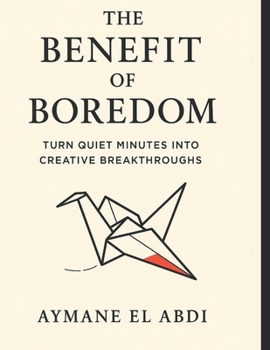
The Benefit of Boredom: Turn Quiet Minutes into Creative Breakthroughs

Boredom isn't the enemy-it's a signal.
When your mind starts to wander, it isn't asking for another scroll; it's asking for better design. The Benefit of Boredom shows you how to turn quiet minutes into a reliable machine for ideas, focus, and finished work-without heroics, hacks, or guilt.
Grounded in cognitive science and built for messy days, this book replaces vague motivation with small, testable moves. You'll learn the EV Card (Target - Method - Meaning) to start clean, "white-space blocks" that end with something real, and constraint games that shrink the search space and boost originality. You'll discover how incubation actually works (and how to keep it from becoming rumination), how to use nature and micro-rituals to reset attention, and how to measure progress with humane numbers like recovery time and ship rate.
Inside you'll find:
Seven core practices (silent walks, boredom sprints, analog drift, deep play, small bets) you can keep.
Digital hygiene that sticks-friction beats willpower for phones, feeds, and inboxes.
N-of-1 experiments to learn what helps you, not the internet.
Team, classroom, and home playbooks so attention survives calendars, kids, and chat.
Guardrails for when boredom masks deeper issues (depression, ADHD patterns, compulsive loops)-with clear, kind next steps.
A 30-day program that ends with one real thing shipped and a personal operator's manual you'll actually use.
Whether you're a creator, student, manager, parent, or anyone whose day gets perforated by pings, this is a practical, generous guide to designing minutes that matter. No ascetic retreats. No perfect routines. Just physics you can feel: add edges, reduce switch costs, end every block with a visible win-and let boredom become the bell that starts your best work.
Customer Reviews
ThriftBooks ® and the ThriftBooks ® logo are registered trademarks of Thrift Books Global, LLC
