


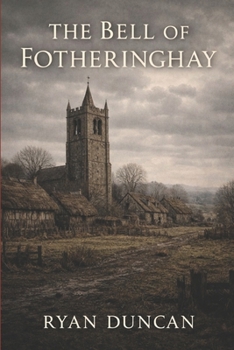
The Bell of Fotheringhay

England, 1216.
The king is dead. A child wears the crown. Order has been declared restored-yet the realm is still divided.
In the village of Fotheringhay, survival depends not on victory or law, but on habit: who keeps the records, who controls charity, and who decides which lives are worth remembering. When alms meant for the sick and poor are withheld behind locked boards and tidy accounts, no accusation is spoken aloud. Hunger is punishment enough, and silence protects those who enforce it.
Maud is a mother with a sick child and no shield but endurance. She understands what the village will not yet admit: power does not need cruelty to be effective. It only needs procedure. As church and hall close ranks to preserve appearances, Maud and a small circle of parishioners discover a different kind of resistance-not rebellion, but witness: names written down, bread counted in daylight, authority forced into the open.
What follows is not a revolution, but something more dangerous: the slow reshaping of custom itself.
The Bell of Fotheringhay is a stark, deeply grounded historical novel about how ordinary people endure systems designed to overlook them-about hunger, faith, memory, and the fragile power of being seen, where justice is never simply restored, but order, once broken, can be made to return.
For mature readers: themes of systemic oppression, hunger, illness, religious authority, and social coercion. No graphic violence or explicit sexual content.
Customer Reviews
ThriftBooks ® and the ThriftBooks ® logo are registered trademarks of Thrift Books Global, LLC
