


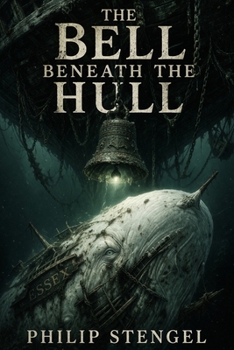
The Bell Beneath the Hull

On the Pequod, the ocean does not just swallow men. It edits them.
Ishmael signs onto Captain Ahab's whaling voyage to escape a life gone thin and airless, but the ship meets him with a smell of burned fat and metal, and a slick sheen that will not wash off. The crew has learned quiet habits, covered mouths, wiped lips, and prayers they do not speak aloud, because something in the fog is listening for language.
Then the White Whale rises, and the horror becomes legible. It carries lines of writing across its scarred back, sentences that shift like fresh ink, and commands that tighten the air in every throat. When a name is spoken, the sea answers, and oil blooms into letters, on water, on wood, and on skin. The more the men try to describe what is killing them, the more the sea learns how to write them back.
As Ahab drives deeper into whiteness that feels less like weather and more like paper, Starbuck fights to keep order with gestures and silence, while the ship itself begins to respond with writing instead of movement. Ishmael learns the only rule that matters: a name is a hook, and survival depends on what you refuse to say.
Customer Reviews
ThriftBooks ® and the ThriftBooks ® logo are registered trademarks of Thrift Books Global, LLC
