


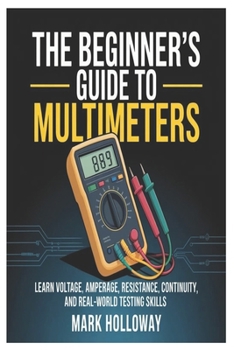
The Beginner's Guide to Multimeters: Learn Voltage, Amperage, Resistance, Continuity, and Real-World Testing Skills

The Beginner's Guide to Multimeters is a comprehensive, clear, and user-friendly manual designed for individuals seeking to understand the fundamentals of multimeters, electrical measurement, and basic circuitry principles. This in-depth guide supports both first-time learners and those with a growing interest in electronics by explaining how multimeters work, what measurements can be taken, and how to practice safely and effectively. This handbook is not simply about using a multimeter-it is a practical educational guide emphasizing responsibility, informed decision-making, and real-world application. Drawing from electrical theory, measurement fundamentals, and hands-on practice, the book provides a balanced, easy-to-follow approach to understanding and using multimeters with confidence and care.
Inside, You'll Discover:
Understanding Multimeters
A clear introduction to the types of multimeters, including digital and analog models, their components, and the principles behind voltage, current, and resistance measurement. Learn why multimeters are essential tools, how they work, and common mistakes to avoid when starting out.
Measurement Functions and Techniques
An overview of the main measurement modes: voltage (AC and DC), current, resistance, and continuity. Learn how to select the proper range, interpret readings accurately, and safely test circuits without damaging components or yourself. This section explains step-by-step procedures in a controlled, responsible, and practical context.
Safe and Responsible Practice
Straightforward guidance on ethical and safe learning practices, including testing only on circuits you own or have permission to work on. Learn why understanding safety protocols, fuse protection, and insulation is essential for hands-on electrical work.
Circuit Anatomy and Principles
Educational explanations of basic electrical concepts such as Ohm's Law, series and parallel circuits, resistors, capacitors, and power sources. Understand how these components interact and how accurate measurement is crucial for diagnosing and troubleshooting circuits.
Practical Applications and Real-World Testing
Important insights into using a multimeter in everyday situations, from testing batteries and household electronics to diagnosing wiring issues in small projects. Learn how to apply measurement knowledge safely and efficiently without compromising circuits or safety.
Who Should Use a Multimeter
A discussion for hobbyists, students, engineers, electricians, and anyone interested in electronics or home repair. This section emphasizes how different users benefit from multimeter skills and why responsible application is key.
Ethical and Safety Considerations
Guidance on electrical safety, local regulations, and responsible practices. Learn how to develop confidence while avoiding risky behaviors and accidents.
Long-Term Skills and Knowledge
Helpful insights on maintaining your multimeter, calibrating it over time, and expanding your measurement skills to more advanced electronics. This section encourages proactive thinking about electrical troubleshooting and project planning.
Frequently Asked Questions and Practical Tips
Answers to common questions about meter functions, measurement techniques, and safety. Gain confidence in your knowledge while staying safe and accurate.
A Responsible and Informed Approach
This handbook promotes ethical curiosity, careful practice, and informed decision-making, encouraging readers to explore electronics safely while respecting safety standards and property. Whether you are new to electrical measurement or looking to improve your troubleshooting skills, The Beginner's Guide to Multimeters equips you with clear, trustworthy knowledge to measure, understand, and test electrical circuits responsibly.
Customer Reviews
ThriftBooks ® and the ThriftBooks ® logo are registered trademarks of Thrift Books Global, LLC
