


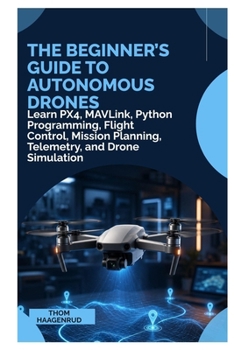
The Beginner's Guide to Autonomous Drones: Learn PX4, MAVLink, Python Programming, Flight Control, Mission Planning, Telemetry, and Drone Simulation

Learn how autonomous aircraft work, how their systems communicate, and how to build software that can interact with them safely.
Autonomous drones bring together software, electronics, sensors, control systems, communication networks, and physical flight. For beginners, the challenge is rarely learning one tool by itself. The real difficulty is understanding how all the parts cooperate during an actual autonomous operation.
The Beginner's Guide to Autonomous Drones provides a structured introduction to the complete development process.
Instead of treating flight software, communication protocols, simulation tools, and programming libraries as separate topics, this book explains how they connect as one complete system.
You will begin by understanding:
How autonomous aircraft make decisionsThe difference between manual, assisted, automatic, and autonomous operationThe sense-estimate-decide-control loop behind autonomous behaviorThe roles of flight controllers, sensors, actuators, companion computers, and ground applicationsHow autopilot software manages stability, navigation, communication, and safetyThe book then moves into practical development.
You will learn how to:
Create a PX4 development environmentWork with QGroundControl for configuration, planning, monitoring, and analysisBuild and test a Software In The Loop simulation environmentUnderstand vehicle states, flight modes, coordinates, and setpointsCommunicate with aircraft systems using MAVLink conceptsWork with telemetry, parameters, commands, acknowledgements, and secure communicationDevelop Python applications for vehicle monitoring and automationConnect applications using MAVSDKRead vehicle information such as position, altitude, battery state, GPS status, and operating modeCreate automated takeoff and landing workflowsBuild waypoint based operationsMonitor mission progress and handle failuresControl movement using Offboard techniquesUnderstand coordinate frames and dynamic setpointsTroubleshoot failed operations using logs and evidence instead of guessworkA major focus of the book is developing reliable engineering habits. You will learn why simulation should come before hardware, why vehicle state must be checked before commands are issued, and why successful autonomous systems require planned failure handling rather than only successful execution.
The practical projects gradually increase in complexity:
A simulated aircraft environmentA Python connection to the aircraftA telemetry monitoring applicationAutomated takeoff and landingMulti-waypoint missionsOffboard motion experimentsTroubleshooting and testing workflowsTransition from simulation to real autonomous systemsThe final stages prepare you for real-world development by covering hardware preparation, companion computers, controlled testing, deployment considerations, security, multi-vehicle concepts, ROS 2, and computer vision pathways.
This book is designed for:
Beginners entering autonomous systemsPython developers interested in roboticsEngineering and computer science studentsDrone enthusiasts moving beyond manual operationDevelopers exploring robotics and unmanned systemsNo previous autonomous aircraft development experience is required. The book focuses on building understanding first, then turning that understanding into practical skills through controlled experiments and projects.
If you want to move beyond flying drones and start understanding the software, systems, and engineering principles behind autonomous operation, this book provides a clear foundation.
Customer Reviews
ThriftBooks ® and the ThriftBooks ® logo are registered trademarks of Thrift Books Global, LLC
