


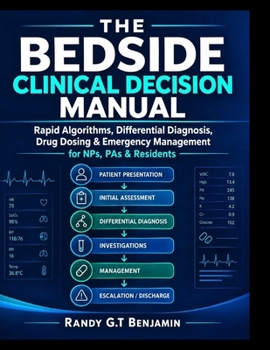
The Bedside Clinical Decision Manual: Rapid Algorithms, Differential Diagnosis, Drug Dosing & Emergency Management for NPs, PAs & Residents

The Bedside Clinical Decision Manual is designed for clinicians who need to organize a clinical problem, identify the most important possibilities, determine the next steps, and recognize when escalation is necessary.
Built around rapid clinical decision-making, this practical reference brings together high-yield clinical algorithms, differential diagnosis, drug dosing, emergency management, inpatient medicine, and bedside assessment in a format designed for rapid consultation.
Inside, you will find practical guidance for:
Approaching common and high-risk clinical presentationsBuilding and prioritizing differential diagnosesUsing step-by-step clinical algorithmsSelecting appropriate initial investigationsInterpreting important clinical findings and laboratory resultsApplying medication and drug-dosing principlesRecognizing emergency conditions that require immediate actionManaging common inpatient clinical problemsDetermining when observation, admission, discharge, or escalation should be consideredUsing concise clinical pearls to avoid common decision-making pitfallsDesigned for busy clinicians.
This manual is especially useful for nurse practitioners, physician assistants, internal medicine residents, hospital-based clinicians, urgent-care clinicians, and other healthcare professionals who need a practical clinical reference at the point of care.
Instead of forcing you to search through lengthy chapters to find a single answer, the book emphasizes structured clinical reasoning and rapid-reference decision pathways that help you move from presentation to assessment, differential diagnosis, management, and disposition.
Use it during rounds, clinical rotations, admissions, urgent evaluations, handoffs, and everyday bedside decision-making.
If you are looking for a practical clinical decision-making reference that brings algorithms, differential diagnosis, emergency management, drug dosing, and bedside medicine into one organized resource, this manual is built for that purpose.
Keep it within reach when the question is not simply "What is the diagnosis?" but "What should I consider next?"
Customer Reviews
ThriftBooks ® and the ThriftBooks ® logo are registered trademarks of Thrift Books Global, LLC
