


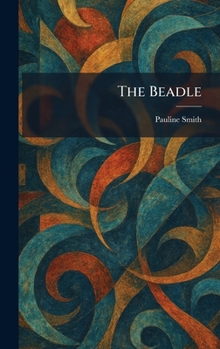
The Beadle

Select Format
Select Condition 
Book Overview
"The Beadle" is a profound and evocative novel set in the starkly beautiful landscape of the Little Karoo in South Africa. Centered on the lives of the residents of the Aasvogel bult, the story explores the complex interplay between faith, tradition, and human desire within a secluded Boer community. The narrative follows Andrina, a young woman of gentle and trusting nature, whose life becomes entwined with that of Henry Nind, a sophisticated visitor from England. As their relationship unfolds, it challenges the rigid moral codes and strict Calvinist beliefs that govern the village.
At the heart of the novel is the enigmatic figure of the beadle, Aanwyk, whose secrets and silent observations anchor the community's social structure. Through rich characterizations and a deep sensitivity to the local culture, Pauline Smith masterfully captures the isolation and spiritual intensity of rural life at the turn of the century. "The Beadle" is celebrated for its lyrical prose and its nuanced portrayal of the tensions between individual passion and collective duty. This work remains a cornerstone of South African literature, offering a timeless meditation on love, sacrifice, and the search for identity in a landscape defined by both its harshness and its beauty.
This work has been selected by scholars as being culturally important, and is part of the knowledge base of civilization as we know it. This work was reproduced from the original artifact, and remains as true to the original work as possible. Therefore, you may see the original copyright references, library stamps (as most of these works have been housed in our most important libraries around the world), and other notations in the work.
This work is in the public domain in the United States of America, and possibly other nations. Within the United States, you may freely copy and distribute this work, as no entity (individual or corporate) has a copyright on the body of the work.
As a reproduction of a historical artifact, this work may contain missing or blurred pages, poor pictures, errant marks, etc. Scholars believe, and we concur, that this work is important enough to be preserved, reproduced, and made generally available to the public. We appreciate your support of the preservation process, and thank you for being an important part of keeping this knowledge alive and relevant.
Customer Reviews
ThriftBooks ® and the ThriftBooks ® logo are registered trademarks of Thrift Books Global, LLC
