


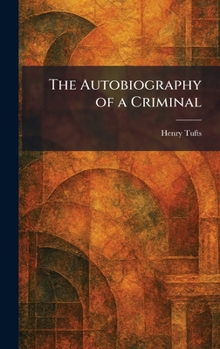
The Autobiography of a Criminal

Select Format
Select Condition 
Book Overview
"The Autobiography of a Criminal" offers a vivid and unfiltered window into the life of Henry Tufts, one of early America's most notorious rogues and vagabonds. Set against the backdrop of the eighteenth century and the American Revolutionary War, this narrative details Tufts' lifelong career of petty theft, horse stealing, and daring escapes from various colonial jails. Far from a conventional moralistic tale, the work serves as a picaresque journey through the underbelly of early American society, showcasing the resourcefulness and resilience of a man living on the fringes of the law.
Tufts' recollections provide invaluable historical insight into the legal systems, social customs, and everyday life of the period. From his service in the Continental Army to his encounters with indigenous tribes and his various attempts at reinvention, the autobiography captures the restless spirit of a burgeoning nation. Henry Tufts recounts his exploits with a mixture of candor and wit, making "The Autobiography of a Criminal" a compelling document for readers interested in true crime, biography, and American history. This work remains a significant literary artifact for its authentic portrayal of a colonial life lived outside the bounds of traditional respectability.
This work has been selected by scholars as being culturally important, and is part of the knowledge base of civilization as we know it. This work was reproduced from the original artifact, and remains as true to the original work as possible. Therefore, you may see the original copyright references, library stamps (as most of these works have been housed in our most important libraries around the world), and other notations in the work.
This work is in the public domain in the United States of America, and possibly other nations. Within the United States, you may freely copy and distribute this work, as no entity (individual or corporate) has a copyright on the body of the work.
As a reproduction of a historical artifact, this work may contain missing or blurred pages, poor pictures, errant marks, etc. Scholars believe, and we concur, that this work is important enough to be preserved, reproduced, and made generally available to the public. We appreciate your support of the preservation process, and thank you for being an important part of keeping this knowledge alive and relevant.
Customer Reviews
A VERY important book about 18th century New England
The Autobiography of a Criminal
ThriftBooks ® and the ThriftBooks ® logo are registered trademarks of Thrift Books Global, LLC
