


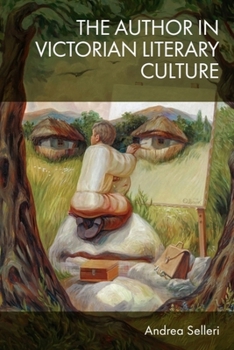
The Author in Victorian Literary Culture
No Customer Reviews

This book traces the history of the idea of the author between the two key critical moments of Romantic expressivism and Modernist formalism. The former dominated anglophone criticism up to the 1830s, and placed authorial expression at the very centre of criticism; the latter became the standard after the First World War, and regarded the author as an undesirable distraction. The book shows that the shift was prepared in Victorian literary culture. Combining analyses of Victorian critical theories and practices with case studies centred on the critical reception of canonical writers such as A.C. Swinburne and Oscar Wilde, the book explores why and how 'impersonality' became the dominant aesthetic ideal in anglophone criticism.
Format:Hardcover
Language:English
ISBN:1399572091
ISBN13:9781399572095
Release Date:December 2026
Publisher:Edinburgh University Press
Length:264 Pages
Customer Reviews
0 rating
Copyright © 2026 Thriftbooks.com
Terms of Use | Privacy Policy | Do Not Sell/Share My Personal Information | Cookie Policy | Cookie Preferences | Accessibility Statement
ThriftBooks ® and the ThriftBooks ® logo are registered trademarks of Thrift Books Global, LLC
ThriftBooks ® and the ThriftBooks ® logo are registered trademarks of Thrift Books Global, LLC
