


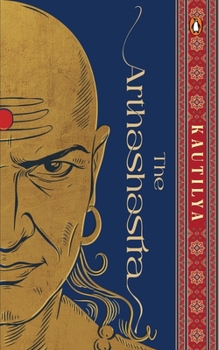
The Arthashastra: Luxury Collectible Edition

The Arthashastra is an extraordinarily detailed manual on statecraft, governance, and the art of living, written by one of classical India's greatest thinkers, Kautilya--also known as Chanakya or Vishnugupta. Composed no later than around 150 CE (though its precise date remains debated), the Arthashastra stands as the most comprehensive treatise on statecraft from the ancient world.
Tradition holds that Kautilya was either a Brahmin from Kerala or from northern India. What is certain is his pivotal role in history: he was the strategist who overthrew the Nanda dynasty and installed Chandragupta Maurya as king of Magadha. A master of political strategy and deeply learned in the Vedas, Kautilya's brilliance is fully reflected in this monumental work.
The Arthashastra consists of fifteen books, covering a vast range of subjects including kingship, law, administration, foreign policy, espionage, economic management, and secret and occult practices. Written primarily in prose, the text also incorporates 380 shlokas (verses).
Artha, meaning wealth, is one of the four supreme aims of life in Hindu tradition, but in the Arthashastra it carries a broader significance. Kautilya argues that the state has a central responsibility in safeguarding the material well-being of both the nation and its people. As a result, large sections of the text focus on economics, public finance, and resource management. When addressing politics, the Arthashastra presents a wide-ranging vision of governance, encompassing the maintenance of law and order and the creation of an efficient administrative system.
Both a political manual and a philosophical work, the Arthashastra remains a foundational text for understanding ancient Indian thought on power, economics, and government.
Customer Reviews
ThriftBooks ® and the ThriftBooks ® logo are registered trademarks of Thrift Books Global, LLC
