
Skip to content
Scan a barcode
Scan
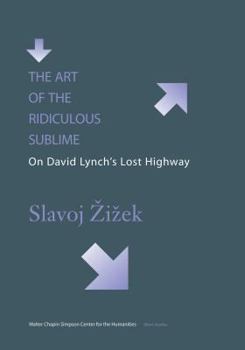
Paperback The Art of the Ridiculous Sublime: On David Lynch's Lost Highway Book

ISBN: 0295979259

ISBN13: 9780295979250

The Art of the Ridiculous Sublime: On David Lynch's Lost Highway

The Art of the Ridiculous Sublime is first of all the detailed reading of David Lynch's The Lost Highway, based on the premises of Lacanian psychoanalysis. Lynch's unique universe of the "ridiculous sublime" is interpreted as a simultaneous playful staging and traversing of the fundamental ideological fantasies that sustain our late capitalist society.

A master of reversals, Zizek invites the reader to reexamine with him easy assumptions, received opinion, and current critical trends, as well as pose tough questions about the ways in which we understand our world and culture. He offers provocative readings of Casablanca, Schindler's List, and Life Is Beautiful in the process of examining topics as diverse--and as closely linked--as ethics, politics, and cyberspace.

Recommended

Format: Paperback

Temporarily Unavailable

15 people are interested in this title.

We receive fewer than 1 copy every 6 months.

Save to List

Customer Reviews

4 ratings

Explicating Lynch using Lacan or explicating Lacan using Lynch

Stand forewarned! Are you familiar with Lacanian psychoanalysis? If not, then what you are going to get out of this tome will be limited. Unfortunately, I think Zizek's exegesis of Lynch's film is one of the best and most interesting- so you may have to study up to get anything out of this... For instance, Zizek talks frequently about The Real, The Imaginary, The Symbolic, The Fantasy, Transversing the Fantasy, Perversion, The Name of the Father, etc. If you don't know what these terms are, you will not be able to just "figure it out" on the fly, because even "pervert" and "fantasy" are being used in technical ways which are different from their popular uses. For instance, a "pervert" is not someone who is horny all the time (though they may be, but that's beside the point), they are people who went through the stage of "alientation" but did not fully complete "seperation," and therefore have to supplement their lack of a fully completed "symbolic castration" by a bolstered "Imaginary." When this Imaginary loses its cohesion and begins to fail, the subject resorts to other strategies such as fetishism, masochism, or sadism. The point here is this is really a book for Lacanians, and not for people who are just interested in Lynch. If you are the latter, you will probably just going to get disgusted and frustrated because Zizek is assuming a basic knowledege in this field. That being said, Zizek is still one of the most entertaining and popular writers of Non-Essentialist Hegelian Lacanian Post-Marxism, and I found this book typical of his output. To use a warfare simile (I am an American, after all), I would suggest that Zizek is less like a surgical strike, and more like a cluster bomb. In this book, which is forty odd pages, he only really writes about Lynch and the movie for a handful, talking about all kinds of other stuff as well, such as cyberspace, mexican soap operas, Spielberg, film Noir, Stalinism, Ideology, Totalitarianism. Zizek has mastered the art of the interesting digression like no other, except for perhaps Trstram Shandy from the Laurence Sterne novel. If you are familiar with Zizek, then you know the routine and probably love it- but for others wanting a clear and focused account of Lost Highway will be frustrated. For a easier account of the same theory, watch the Zizek film The Pervert's Guide to Cinema where Zizek talks at length about Lynch and Lost Highway and gives an even clearer and more popular explanation of his idea(s). Its a great film and a good place to start with Zizek and even Lacanian psychoanalysis. I have felt that sometimes Zizek's publishers (I am guessing it is his publishers), give his books misleading titles. For instance, the Zizek book Looking Awry: An Introduction to Jacques Lacan Using Popular Culture, I feel to be a terrible introduction to Lacan and Lacanian theory. Its a good book, but not as an intrduction to Lacan. Likewise with this book, I feel like Zizek just wrote a book which had

Entertaining, illuminating, cogent

This is an excellent examination of David Lynch's "Lost Highway". It is absolutely crucial that one approaches this text with some background on a) Jacques Lacan or b) postmodern philosophy, specifically, Derrida and Baudrillard. If you are familiar with both, that's even better. When I read this book, I had a solid understanding of postmodernism, but a fairly tenuous grasp on Lacanian psychoanalysis, most of which was from Zizek's own "Enjoy Your Symptom! Jacques Lacan in Hollywood and Out". The book was perfectly understandable and cogent throughout, if you excuse the occasional digression. Without an understanding of Lacan or postmodernism, this book is sure to be difficult and obscure as many of the previous reviewers will attest. It is, however, by no means unclear or impenetrable. Zizek is perfectly lucid, IF you have the proper background. Don't expect him to explain Lacan in a 48 page paperback. As for Zizek's reading of Lost Highway, you will ultimately decide for yourself. I found it illuminating. Sure, the Jungian reading fits really well, but isn't that a bit too easy? Lynch is operating on so many levels simultaneously, so why would he tell a simple story of soul transmigration? The Jungian reading ignores Lynch's other works, such as "Mulholland Drive" and "Blue Velvet". When one examines Lynch's oeuvre, Zizek's analysis begins to make more and more sense. There are a couple noteworthy issues. Lost Highway, at times, feels more like a pretext for Zizek to offer yet another example of Lacanian psychoanalytical technique rather than a book devoted to Lynch's film. Is this a problem? Not necessarily. It depends on what you're looking for. One reviewer alleges that Zizek mixes up certain diegetic elements (mostly names and places). I did not find this to be true. I've seen Lost Highway at least ten times and I didn't notice any errors. Finally, the book itself is extremely brief. If you're hoping for a really in-depth examination, you may be disappointed. Overall, I found the book to be a very enjoyable, entertaining, and informative read.

the highway

anything that has to do with david lynch's movie the lost highway is bound to be worth its weight in gold. this book goes into explanations on the nature of the though processes created by the characters in the movie. the situations only lead one to wonder, how is this even possible. the movies concept of change is to show that there are more ways to view a situation, whether they are good or not and it follows the nature of human beings when they are placed in strange surroundings. hope this was helpful.

A Hitchhiker's Guide to The Lost Highway

When I first saw "Lost Highway," I almost immediately dismissed it as far too unhinged and complex to analyize. It was at turns fascinating and familiar, then frustrating and detached. I was simply amazed at the ability of Lynch to create a narrative that seemed so disjointed, and yet oddly and strangely complete. Slavoj Zizek however, has no trouble distilling the tale to what he believes are its basic elements. He views the tale through the lens of Jacques Lacan, (A Freudian revisionist.) He exhaustively discusses the implications of Fred's impotence and (possible) fantasy of violence and escape, and the construction of a fantasy that includes a virile version of himself, and a disjointededly evil "Father" figure in Mr. Eddy. He boils the tale down to the implications of such contructions and their inherent and necessary failure, because the very fears that call them into play tear them apart. (As seen by the re-introduction of dark haired Renee and Fred's Physical form in the second half of the film.) He also addresses other aspects of the work, first, as the title suggests, he discusses this work as a film that addresses both a "known" reality, (the convoluted plot) and an ineffable, yet unconsciously addressable sort of hyper reality (the "Real" meaning behind the work.) He does this by exploring many themes, reducing them often to cliche's drawn from popular culture. He looks at Renee/Alice's role as femme fatale in a "neo-noir" setting, the issues of male construction of phallic fantasy and sexual objectivism, the role of ultimate evil and impossible beauty in the Lynch catalogue, and he finally hails Lost Highway as an example of what movies can become in the future, a sort of hypertexed jungle of possibilities and superimposed realities, where the viewer can control (or believe they can control,) the outcome of the film. He really helped me appreciate the forces at play (whether they are intentionally placed there by the author or no,) in a film that I already thoroughly enjoyed. He lets me explore the aspects of this film that "Spoke" to me on a level that I could not previously express, and yet somehow I understood. Finally, a word on the craft aspect of this book. This is less a paperback book than it is a pamphlet or portfolio. Nonetheless, the 40 pages of essay are meaty enough for several readings, and the issues covered will have you watching Lost Highway about eight more times, and getting more and more out of it as you pick up on moments in the plot that help you expound on Zizek's ideas. It is well worth the price, and easily accessable to the reader that has no knowledge of Freud or Lacan. Zizek is an outstanding writer. He does not insult his reader in an attempt to dumb his subject down, nor does he fill his prose with lengthy words that leave one scrambling for the dictionary.
Copyright © 2026 Thriftbooks.com Terms of Use | Privacy Policy | Do Not Sell/Share My Personal Information | Cookie Policy | Cookie Preferences | Accessibility Statement
ThriftBooks® and the ThriftBooks® logo are registered trademarks of Thrift Books Global, LLC

GoDaddy Verified and Secured