


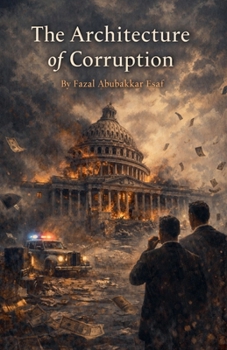
The Architecture of Corruption

Corruption is often described as an act - a bribe exchanged, a contract manipulated, a law bent.
In reality, corruption is rarely an event.
It is a system.
It survives through networks, adapts to oversight, learns from exposure, and often embeds itself so deeply within institutions that it begins to resemble normal functioning.
The danger is not merely financial loss.
The greater threat is institutional erosion - when citizens stop expecting fairness, when accountability becomes selective, and when power operates without meaningful restraint.
This book does not approach corruption as scandal.
It examines corruption as architecture.
You will not only see how corruption happens, but:
why institutions fail to resist ithow fear sustains itwhy societies sometimes tolerate itwhat structural reform actually requiresMost importantly, this book moves beyond diagnosis.
It offers frameworks.
Blueprints.
Operational tools.
Because outrage without strategy changes very little.
This is not a book about cynicism.
It is a book about possibility.
Systems are built by people - and rebuilt the same way.
Customer Reviews
ThriftBooks ® and the ThriftBooks ® logo are registered trademarks of Thrift Books Global, LLC
