


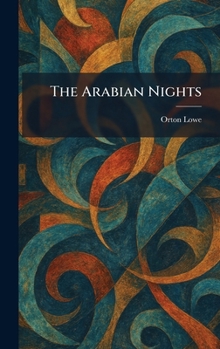
The Arabian Nights

"The Arabian Nights" is a monumental collection of Middle Eastern folk tales, myths, and legends that has captivated readers for centuries. Framed by the courageous storytelling of Scheherazade, who weaves intricate narratives to preserve her life, this collection serves as a portal into a world of magic, adventure, and ancient wisdom. From the high-seas voyages of "Sinbad the Sailor" to the enchanted lamps of "Aladdin," these stories transport audiences to a landscape populated by powerful genies, cunning thieves, and noble princes.
This rendition preserves the evocative wonder of the original oral traditions while making the classic tales accessible for a broad audience. The work explores universal themes of justice, greed, and cleverness, reflecting the rich cultural heritage of the Islamic Golden Age. As a cornerstone of world literature, "The Arabian Nights" remains an essential exploration of the human imagination, offering a tapestry of interlocking stories that demonstrate the transformative power of narrative. This enduring classic continues to influence modern storytelling, art, and cinema, standing as a testament to the timeless appeal of the "One Thousand and One Nights."
This work has been selected by scholars as being culturally important, and is part of the knowledge base of civilization as we know it. This work was reproduced from the original artifact, and remains as true to the original work as possible. Therefore, you may see the original copyright references, library stamps (as most of these works have been housed in our most important libraries around the world), and other notations in the work.
This work is in the public domain in the United States of America, and possibly other nations. Within the United States, you may freely copy and distribute this work, as no entity (individual or corporate) has a copyright on the body of the work.
As a reproduction of a historical artifact, this work may contain missing or blurred pages, poor pictures, errant marks, etc. Scholars believe, and we concur, that this work is important enough to be preserved, reproduced, and made generally available to the public. We appreciate your support of the preservation process, and thank you for being an important part of keeping this knowledge alive and relevant.
Customer Reviews
ThriftBooks® and the ThriftBooks® logo are registered trademarks of Thrift Books Global, LLC
