


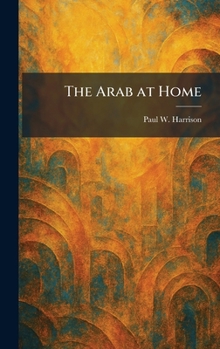
The Arab at Home

Select Format
Select Condition 
Book Overview
"The Arab at Home" offers an immersive and detailed exploration of life on the Arabian Peninsula during the early twentieth century. Written by Paul W. Harrison, a medical missionary with years of firsthand experience in the region, the work provides an intimate look at the social structures, religious practices, and daily struggles of the Arab people.
From the nomadic lifestyle of the Bedouins in the vast deserts to the bustling activity of coastal towns, Harrison captures the resilience and hospitality of a culture often misunderstood by Western audiences. The narrative delves into the complexities of tribal loyalty, the influence of Islam on private and public life, and the unique challenges posed by the harsh physical environment. By combining personal anecdotes with keen sociological observation, "The Arab at Home" serves as an invaluable historical record of a pivotal era in Middle Eastern history. It remains a compelling resource for readers interested in anthropology, travel literature, and the rich cultural heritage of the Arab world.
This work has been selected by scholars as being culturally important, and is part of the knowledge base of civilization as we know it. This work was reproduced from the original artifact, and remains as true to the original work as possible. Therefore, you may see the original copyright references, library stamps (as most of these works have been housed in our most important libraries around the world), and other notations in the work.
This work is in the public domain in the United States of America, and possibly other nations. Within the United States, you may freely copy and distribute this work, as no entity (individual or corporate) has a copyright on the body of the work.
As a reproduction of a historical artifact, this work may contain missing or blurred pages, poor pictures, errant marks, etc. Scholars believe, and we concur, that this work is important enough to be preserved, reproduced, and made generally available to the public. We appreciate your support of the preservation process, and thank you for being an important part of keeping this knowledge alive and relevant.
Customer Reviews
ThriftBooks ® and the ThriftBooks ® logo are registered trademarks of Thrift Books Global, LLC
