


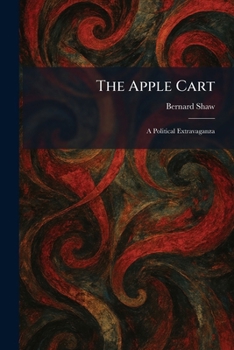
The Apple Cart: A Political Extravaganza

"The Apple Cart: A Political Extravaganza" is a brilliant satirical play by the renowned dramatist Bernard Shaw. Set in a future England, the play explores the power struggle between King Magnus and his democratically elected cabinet. As the ministers attempt to reduce the monarch to a mere figurehead, Magnus employs his superior wit and political acumen to maintain his influence, ultimately exposing the complexities and absurdities of the parliamentary system.
A sharp commentary on the nature of governance, "The Apple Cart" delves into the delicate balance between monarchy and democracy. Shaw challenges the audience's perceptions of leadership, questioning whether a popular government is truly representative of the people's will or if it is merely a facade for other interests. Through witty dialogue and paradoxical situations, the work examines the influence of corporate power on politics and the role of the individual within a bureaucratic state.
This "political extravaganza" remains one of Shaw's most insightful works, offering a timeless critique of political structures and the personalities that inhabit them. Its enduring relevance lies in its sophisticated exploration of authority, responsibility, and the ever-shifting landscape of power.
This work has been selected by scholars as being culturally important, and is part of the knowledge base of civilization as we know it. This work was reproduced from the original artifact, and remains as true to the original work as possible. Therefore, you may see the original copyright references, library stamps (as most of these works have been housed in our most important libraries around the world), and other notations in the work.
This work is in the public domain in the United States of America, and possibly other nations. Within the United States, you may freely copy and distribute this work, as no entity (individual or corporate) has a copyright on the body of the work.
As a reproduction of a historical artifact, this work may contain missing or blurred pages, poor pictures, errant marks, etc. Scholars believe, and we concur, that this work is important enough to be preserved, reproduced, and made generally available to the public. We appreciate your support of the preservation process, and thank you for being an important part of keeping this knowledge alive and relevant.
Related Subjects
DramaCustomer Reviews
ThriftBooks® and the ThriftBooks® logo are registered trademarks of Thrift Books Global, LLC
