


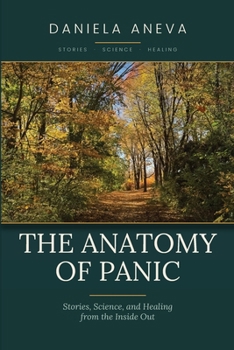
The Anatomy of Panic - Stories, Science, and Healing from the Inside Out
No Customer Reviews

A panic attack lasts, on average, ten minutes. Panic disorder can last years. The difference between the two is made of fear, avoidance, and the slow contraction of a life around whatever still feels safe. If you have ever stood in a supermarket aisle, heart hammering, unable to reach the exit fast enough, convinced that something was very wrong - this book is for you.The Anatomy of Panic is a comprehensive, deeply human guide to understanding and recovering from panic disorder. Written for a general readership that includes the millions of people who experience it, the clinicians and coaches who support them, and the loved ones who live beside them, this book combines rigorous clinical science with twenty rich patient stories drawn from across cultures, professions, and life circumstances.What makes it distinctive is its refusal to separate the science from the stories or the clinical from the personal. Every framework is anchored in a life. Every tool is grounded in evidence. Every chapter earns its place on the shelf not just as information but as company - the particular companionship that comes from reading something that says, precisely and without condescension, what you have been experiencing.The book is complete, fully drafted, edited, and ready for production. The book is organised in four parts across twenty chapters. Each chapter centres on a patient story and an evidence-based clinical framework. Thirty-six practical tools are woven throughout, and a 12-worksheet Workbook Appendix supports active use alongside reading.
Part One - Understanding Panic (Chapters 1-4)
What panic disorder is, how it works biologically and psychologically, what it costs people, and the full clinical picture illustrated through four patient stories: Mia (graphic designer), Carlos (architect), Darius (chef), Nina (teacher), and Emma (attorney).Part Two - Therapeutic Pathways (Chapters 5-12)
Eight evidence-based approaches to treating panic disorder, each given its own chapter and patient story: CBT (Hannah), mindfulness (Melissa), schema therapy (Arjun), EMDR (Laila), psychoanalytic therapy (Esther), somatic approaches (Gabriel), medication (Soraya), and personality-informed treatment (Emma, Marcus, Talia).Part Three - Panic in Specific Contexts (Chapters 13-17)
Panic disorder as it presents in five specific circumstances: alongside PTSD (Renee), generalised anxiety (Emilia), fertility treatment (Isabela), grief (Kwame), and the daily maintenance of recovery (Mia, revisited).Part Four - Living Well (Chapters 18-20)
A personalised recovery planning framework (Chapter 18), a guide for partners and family members (Chapter 19), and a closing letter to the reader (Chapter 20) with a complete 36-tool index and resources.Post-pandemic mental health investment is at a historic high. Employers, healthcare systems, and individuals are all actively seeking evidence-based, accessible resources.Format:Paperback
Language:English
ISBN:B0H27FPN75
ISBN13:9798234082169
Release Date:August 2026
Publisher:Daniela Aneva
Length:286 Pages
Weight:0.85 lbs.
Dimensions:9.0" x 0.6" x 6.0"
Customer Reviews
0 rating
Copyright © 2026 Thriftbooks.com
Terms of Use | Privacy Policy | Do Not Sell/Share My Personal Information | Cookie Policy | Cookie Preferences | Accessibility Statement
ThriftBooks ® and the ThriftBooks ® logo are registered trademarks of Thrift Books Global, LLC
ThriftBooks ® and the ThriftBooks ® logo are registered trademarks of Thrift Books Global, LLC
