


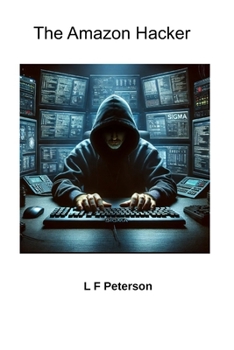
The Amazon Hacker

The Amazon Hacker inherits cyberpunk's "high tech, low life" ethos while escalating corporate domination to biological extremes. Where William Gibson's Neuromancer (1984) introduced multinational tech conglomerates as shadow powers, this text literalizes corporate sovereignty through Amazon/Walmart's ownership of human anatomy. Neural lace compliance systems evoke Masamune Shirow's Ghost in the Shell (1991) cyberbrains but with a critical innovation: biological hardware becomes a subscription service, parodying modern SaaS models.
Notably absent is cyberpunk's romanticized hacker ethos. Resistance instead manifests through synthetic biology (kombucha symbiotic culture of bacteria and yeast weapons) and fungal networks, closer to Jeff VanderMeer's Annihilation (2014) ecopunk than Stephenson's Snow Crash (1992). This shifts power dynamics from digital wizardry to hybrid bio-algorithmic warfare, reflecting contemporary anxieties about CRISPR and synthetic lifeforms.
Biopunk Evolution: From Atwood to Algorithmic Organs, the manuscript radicalizes biopunk's exploration of corporate-controlled biology. Margaret Atwood's Oryx and Crake (2003) depicted gene-edited species as corporate products, but here CRISPR lice act as black market tools - biological USB drives smuggling data through bloodstreams. Paolo Bacigalupi's The Windup Girl (2009) used calorie-based economics; this text escalates to metabolic capitalism where Renal systems run darknet markets, Pancreas regulates tax havens, and Mitochondria mine cryptocurrency.
Such innovations bridge Donna Haraway's Cyborg Manifesto (1985) with modern blockchain theory, positioning the body as a literal corporate-state battleground. The fungal mycelium network's sentient resistance (a nod to Suzanne Simard's Finding the Mother Tree, 2021) introduces an ecological counterforce absent in earlier biopunk works.
The Amazon Hacker redefines posthumanism through corporate assimilation. Charles Stross' Accelerando (2005) envisioned digitized consciousness; here, Amazon Web Service soul servers compress human identities into 8KB customer service bots, critiquing cloud storage ethics. Peter Watts' Blindsight (2006) explored alien economics, but this work's "quantum logistics" - where supply chains exist in superposition across realities - weaponizes quantum theory for antitrust warfare. This extends Shoshana Zuboff's surveillance capitalism (2019) into metabolic capitalism, where even apoptosis (programmed cell death) follows blockchain consensus protocols.
Theological Undercurrents in Tech Dystopia retains spiritual resonance through Sacramental Technology. Consciousness composting satirizes evangelical rapture narratives. Debt instruments persisting post-singularity mirror Buddhist/Hindu concepts of karmic cycles. This aligns with Philip K. Dick's exploration of gnosticism in tech systems (VALIS, 1981) but replaces mystical revelation with algorithmic determinism. The kombucha colonies' gaseous middle fingers toward compliance algorithms become a grotesque inversion of Zen koans.
The text demands engagement with Biopolitics (Foucault, 1976): Corporate control extends to microbiomes and epigenetic regulation. Hyperobjects (Morton, 2013): Quantum supply chains and fungal networks as climate change metaphors. Accelerationism (Srnicek/Williams, 2015): Pushing capitalist logic to apocalyptic extremes as critique. Posthuman Ethics (Braidotti, 2013): Human characters as obsolete intermediaries in corporate-ecosystem warfare. The text's refusal to center human agency challenges both cyberpunk's lone heroes and cli-fi's survival narratives, proposing a grotesque symbiosis of corporate/biological evolution.
Customer Reviews
ThriftBooks® and the ThriftBooks® logo are registered trademarks of Thrift Books Global, LLC
