


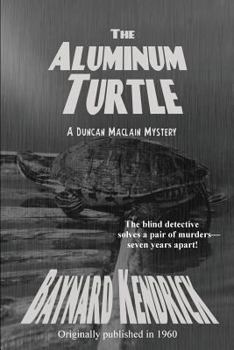
The Aluminum Turtle: A Classic Mystery of Clues, Deception, and Hidden Design
(Book #11 in the Duncan Maclain Mystery Series)

Select Format
Select Condition 
Book Overview
A tightly constructed mystery in which an unusual object becomes the key to deception, concealment, and calculated crime. In The Aluminum Turtle, Baynard Kendrick builds a narrative around a seemingly minor detail that gradually reveals its central importance, drawing the investigation into a pattern of misdirection and concealed intent.
Kendrick's approach reflects the disciplined structure of classic detective fiction, where each clue carries weight and resolution depends on careful interpretation rather than coincidence. The story unfolds through measured inquiry, with attention given to physical evidence, timing, and the inconsistencies that emerge under scrutiny. As the investigation progresses, what first appears incidental assumes greater significance, leading to a solution grounded in logic and observation.
A representative example of mid-twentieth-century mystery writing, The Aluminum Turtle demonstrates Kendrick's ability to combine an inventive premise with controlled narrative development. It will appeal to readers of traditional detective fiction, puzzle-driven plots, and carefully structured crime narratives.
Customer Reviews
ThriftBooks® and the ThriftBooks® logo are registered trademarks of Thrift Books Global, LLC
