


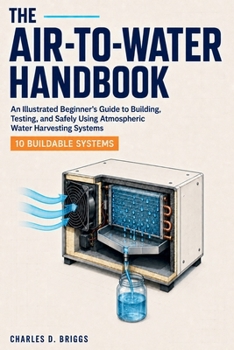
The Air-to-Water Handbook: An Illustrated Beginner's Guide to Building, Testing, and Safely Using Atmospheric Water Harvesting Systems

There's water in the air around your home right now. The question isn't whether it's there. It's whether a system you build can actually collect it, how much water you can realistically expect, and what that water is safe to be used for.
Most books on atmospheric water harvesting never get that far. They explain the science or describe promising ideas, but leave out the dimensions, costs, construction details, and measurements needed to build and evaluate a working system.
The Air-to-Water Handbook is a practical construction manual for complete beginners.
Inside are ten buildable systems, each selected using the same standard: it must be practical to construct, possible to test, and honest about the conditions required for it to work.
Inside, you'll discover:
A quick climate feasibility test that identifies which collection methods are worth considering where you liveTen complete builds, including a low-cost dew panel, appliance condensate recovery systems, and a solar-regenerated desiccant harvesterNumbered construction steps, material lists, dimensions, estimated costs, and realistic output rangesNearly fifty clear black-and-white illustrations showing how the components fit togetherCost-per-liter calculations for powered systems, based on disclosed operating conditionsTroubleshooting guides and maintenance schedules for diagnosing weak or inconsistent outputA practical scaling framework for expanding systems that perform wellClear water-safety guidance explaining when harvested water may be suitable for non-potable use, when treatment and testing are required, and when it should not be usedThis book will not promise unlimited drinking water from a homemade device. It will show you what atmospheric water harvesting can realistically accomplish for your climate, budget, and skill level.
It is written for beginners, homesteaders, off-grid households, gardeners seeking supplemental irrigation water, emergency-preparedness readers, and anyone considering an atmospheric water generator before spending money on one.
Run the climate test, choose the right system, and start your first build with realistic expectations. Scroll up and grab your copy now
Customer Reviews
ThriftBooks ® and the ThriftBooks ® logo are registered trademarks of Thrift Books Global, LLC
