


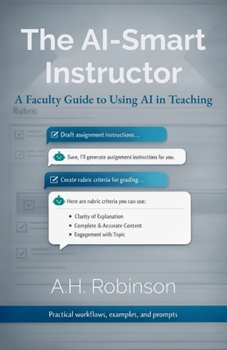
The AI-Smart Instructor: A Faculty Guide to Using AI in Teaching

This book is a practical, faculty-centered guide to using generative artificial intelligence in higher education to strengthen teaching, clarify expectations, and preserve academic rigor. It is written for instructors who are navigating tools such as ChatGPT, Copilot, and Gemini and who want actionable strategies, not hype, fear-based messaging, or technical tutorials, for responding thoughtfully in their everyday work.
The core premise is simple: AI adoption in higher education is underway, but it is uneven, complex, and often happening faster than institutions can provide clear guidance. Faculty and students are making real-time decisions about what is acceptable, what is ethical, and what counts as evidence of learning. Rather than treating AI as a problem that can be solved through enforcement alone, the book frames AI as a catalyst that exposes long-existing vulnerabilities, especially in course designs that rely heavily on product-focused work completed outside of class. When polished writing, answers, and explanations can be generated quickly, the central faculty challenge becomes designing learning experiences that make student thinking visible and measurable.
Customer Reviews
ThriftBooks® and the ThriftBooks® logo are registered trademarks of Thrift Books Global, LLC
