


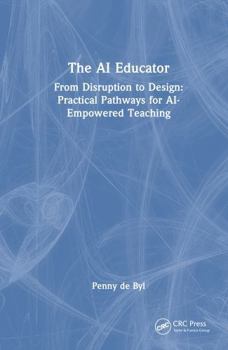
The AI Educator: From Disruption to Design: Practical Pathways for Ai-Empowered Teaching

The AI Educator traces how artificial intelligence is reshaping the purpose, practice, and ethics of education. Rather than treating AI as a threat or cure-all, the book situates it within a long history of technological disruption, from the printing press to the internet, revealing the recurring patterns of fear, adaptation, and renewal that accompany each wave of innovation.
Drawing on classroom research, case studies, and contemporary scholarship, it examines how generative AI challenges traditional pedagogies, assessment practices, and professional identities. Chapters explore the erosion and restoration of academic integrity, the evolving role of teachers, the design of ethical guardrails, and the shift from product-oriented to process-based learning. Central to the book is the argument that AI's educational value lies not in automation, but in how thoughtfully it is integrated to deepen reflection, creativity, and critical inquiry.
Through accessible examples and practical frameworks, such as AI-permission models, generative assessment design, and prompt engineering for learning, the book offers educators concrete strategies to harness AI as a collaborative partner rather than a replacement. It introduces concepts such as meta-AI literacy and generativism to help teachers and students navigate new forms of authorship and knowledge-making.
Ultimately, AI in Education calls for a human-centred pedagogy grounded in empathy, integrity, and purposeful innovation. It invites educators to reclaim agency in the design of AI-enhanced classrooms and to reaffirm what remains irreplaceably human in teaching and learning.
Customer Reviews
ThriftBooks® and the ThriftBooks® logo are registered trademarks of Thrift Books Global, LLC
